

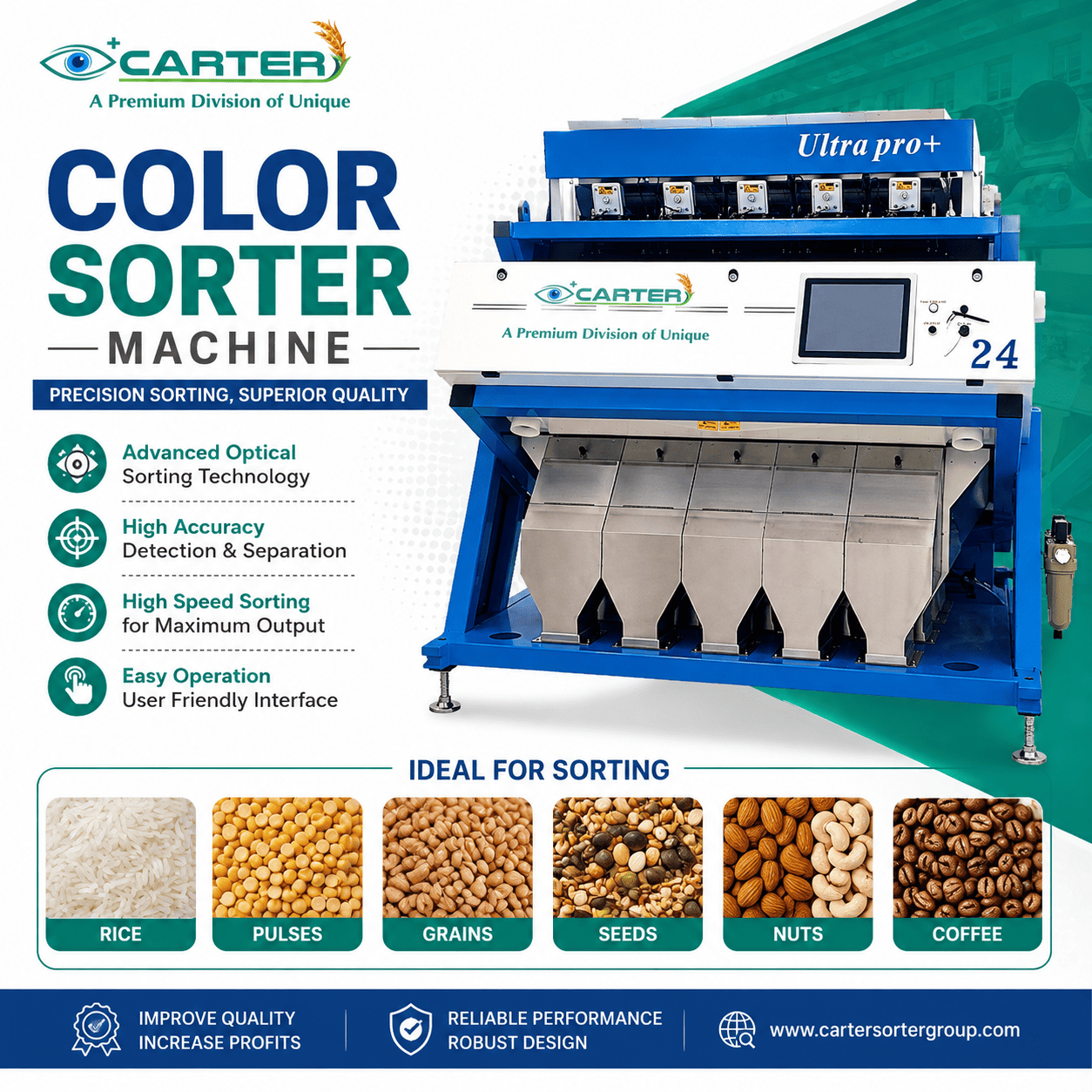
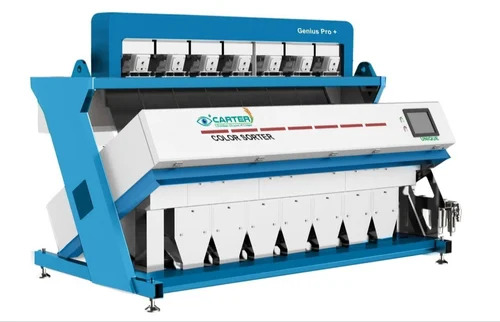
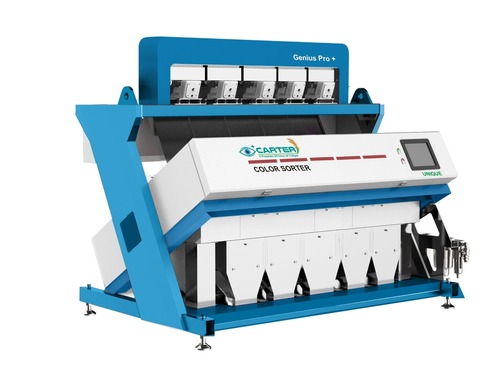
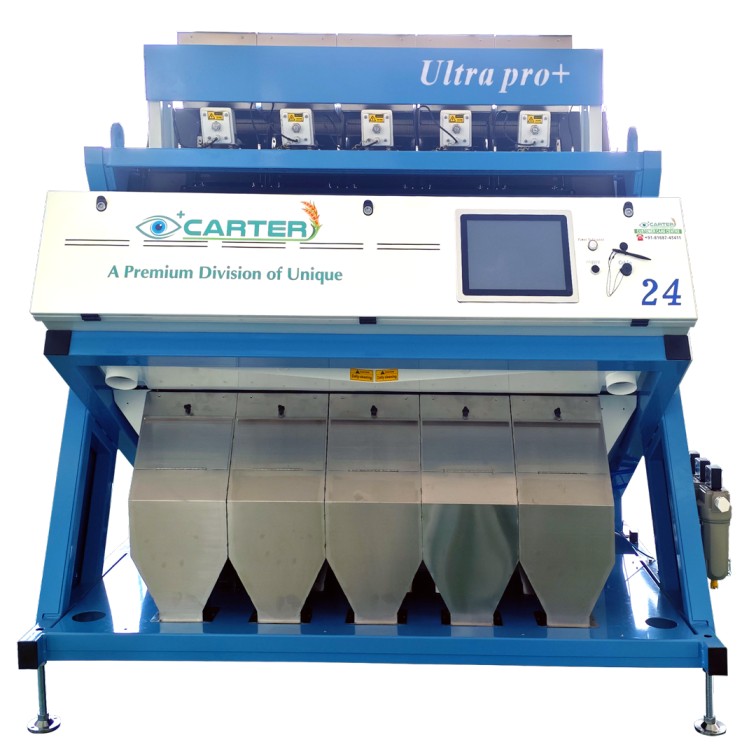
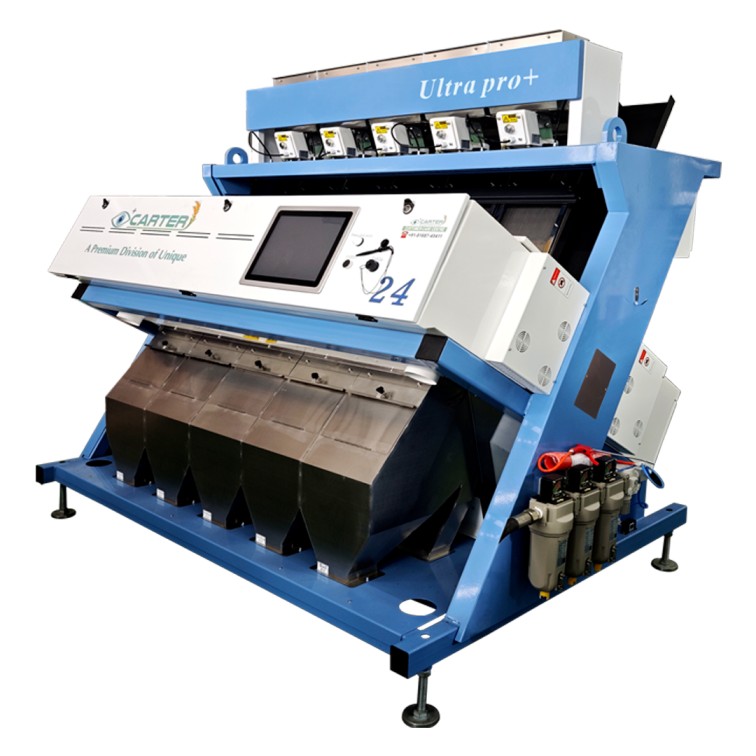
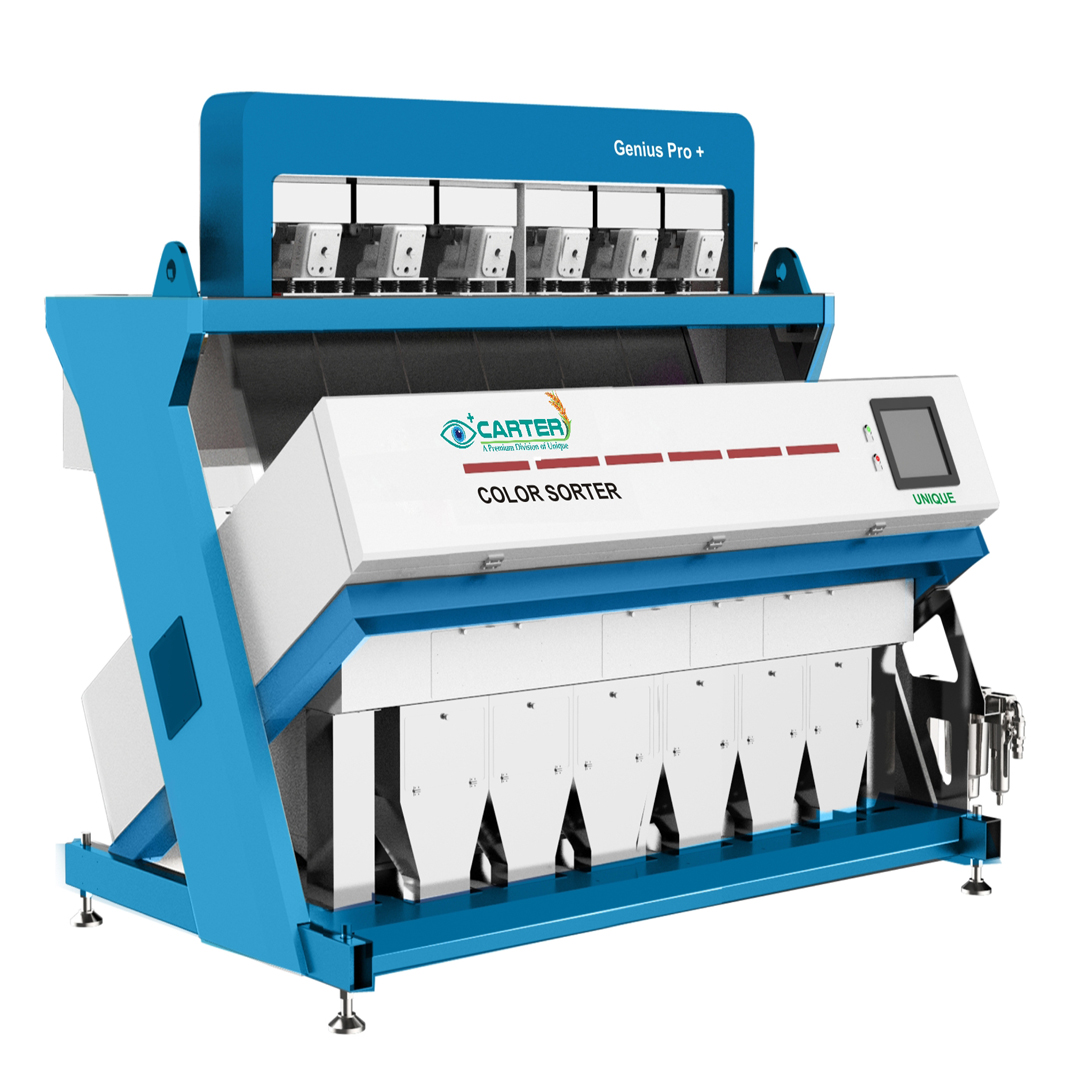
A Color Sorter Machine is an advanced optical sorting system designed to identify and separate materials according to their color, appearance, size, shape, and quality characteristics. It is widely used in food processing, agriculture, grain processing, seed processing, pulses processing, rice mills, and other industries where high-quality products and accurate sorting are essential.
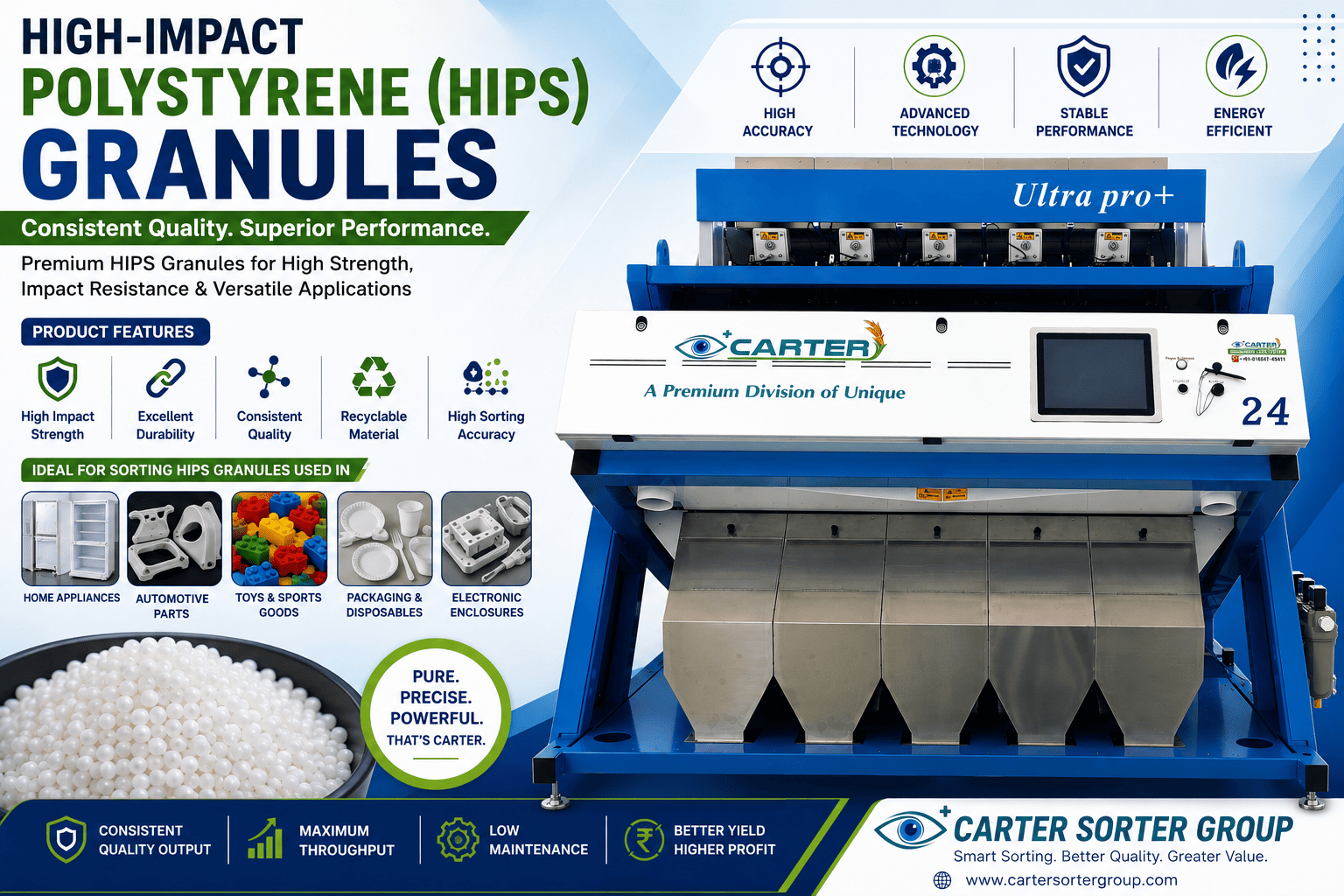
Carter Sorter Group provides advanced Color Sorter Machine solutions designed to improve product quality, reduce manual sorting requirements, increase processing efficiency, and deliver consistent sorting performance. Modern optical sorting technology allows manufacturers and processors to remove unwanted, discolored, damaged, foreign, or inferior materials from the main product stream.
In today's competitive processing industry, maintaining consistent product quality is extremely important. Traditional manual sorting can be time-consuming, labor-intensive, and inconsistent. A modern Color Sorter Machine uses cameras, optical sensors, image-processing technology, and precision air ejection systems to detect unwanted materials and separate them from good-quality products.
Whether you are processing rice, wheat, pulses, seeds, grains, coffee, nuts, plastic materials, or other products, the right Color Sorter Machine can become an important part of your processing line.
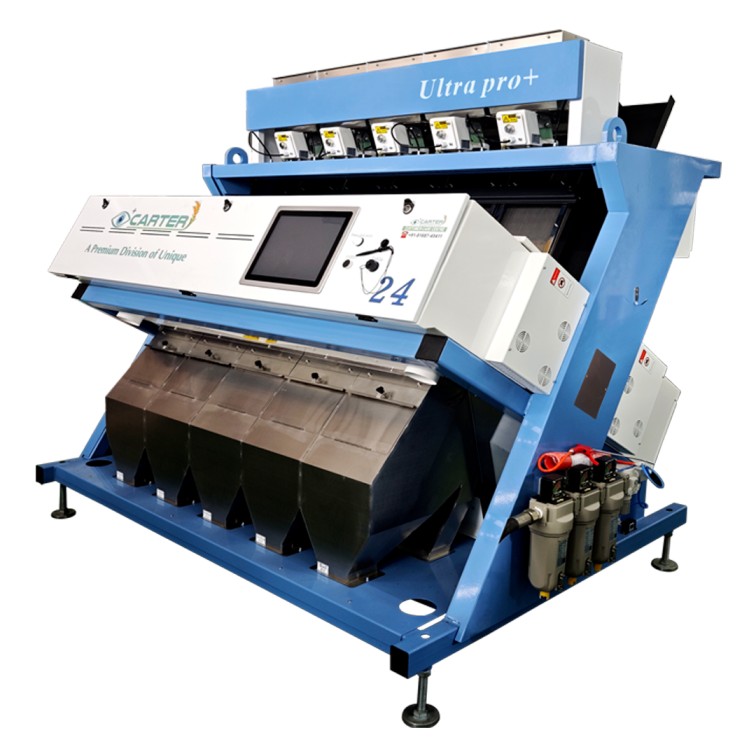
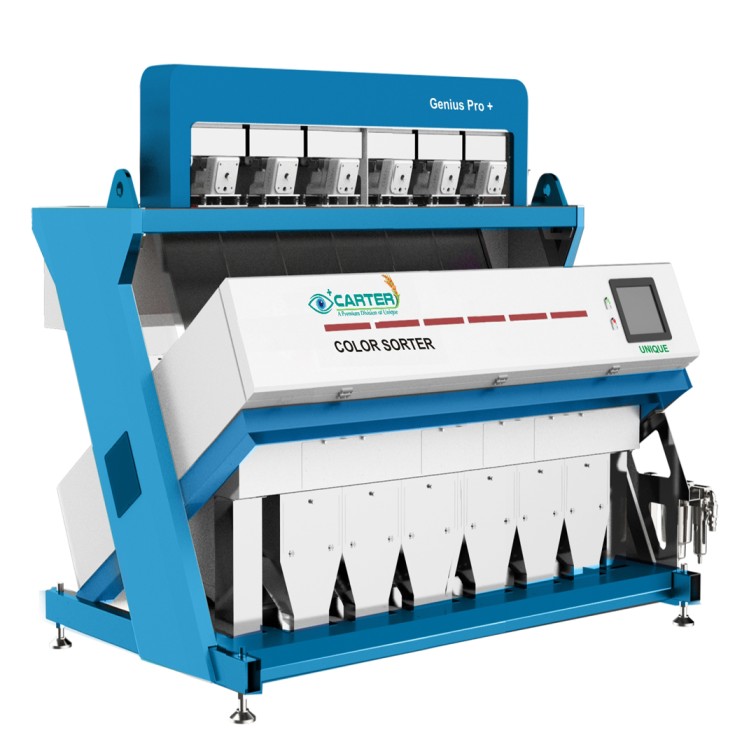
A Color Sorter Machine is an automated sorting machine that uses advanced optical technology to distinguish between acceptable and defective materials. During the sorting process, the product passes through a controlled feeding system and moves through an inspection area where high-resolution cameras and sensors examine individual particles.
The machine analyzes differences in color, shade, shape, and other visible characteristics. When a defective or unwanted particle is detected, the machine activates a precisely controlled pneumatic air jet to eject the material from the product stream.
This automated process enables continuous sorting with high accuracy and significantly reduces dependence on manual inspection.
A Color Sorter Machine can be customized or configured for different processing applications depending on the material, capacity requirements, product characteristics, and sorting objectives.
The working process of a Color Sorter Machine generally involves several important stages:
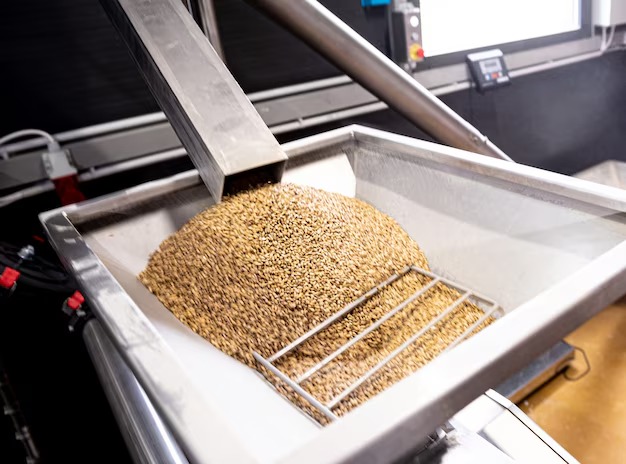
The raw material enters the machine through a feeding system. Uniform and controlled feeding helps ensure that individual grains, seeds, pulses, or other particles can be properly inspected.
The material is distributed through channels or chutes so that individual products can pass through the inspection area in a controlled manner.
Advanced cameras and optical sensors inspect the material as it passes through the sorting zone. The system identifies differences in color, brightness, appearance, and other programmed parameters.
The machine's intelligent processing system analyzes the images captured by the sensors. Depending on the application, it can identify discolored, damaged, foreign, or unwanted particles.
When a particle does not meet the predefined quality parameters, the control system identifies it as a reject.
High-speed pneumatic ejectors activate at the appropriate moment and remove the unwanted particle from the product stream.
The accepted product continues through the machine, while rejected material is collected separately. This creates a more consistent and cleaner final product.
A modern Color Sorter Machine is designed to provide reliable and efficient sorting performance. Depending on the model and application, important features can include:
The exact features and specifications may vary depending on the machine configuration and the product being processed.
The versatility of a Color Sorter Machine makes it suitable for many industries and products.
Rice processing is one of the most common applications of optical sorting technology. A rice color sorter can help remove yellow, black, damaged, discolored, chalky, or otherwise unwanted grains from the product stream.
Improved sorting helps rice processors achieve a more uniform appearance and consistent product quality.
Grains may contain damaged, discolored, or foreign particles that affect the quality of the final product. A Color Sorter Machine can be used for sorting various grains based on their visual characteristics.
Seed processors require clean and uniform seeds for commercial processing and packaging. A Color Sorter Machine can assist in removing discolored, damaged, immature, or unwanted seeds.
When integrated with cleaning, grading, and other seed processing equipment, optical sorting can contribute to an efficient seed processing line.
Pulses such as lentils, chickpeas, peas, beans, and other processed products can contain color variations, damaged particles, foreign materials, or undesirable grains.
A Color Sorter Machine can help processors improve the visual quality and uniformity of pulses and dal.
Wheat processing facilities can use optical sorting technology to identify and remove selected defective or unwanted kernels based on visual characteristics.
Corn and maize processing applications can also benefit from automated optical sorting for separating unwanted or discolored material.
Optical sorting technology can be used in selected nut and dry-fruit processing applications to identify products with undesirable visual characteristics.
Coffee processors can use color sorting systems to separate defective or inconsistent beans and improve the uniformity of the processed product.
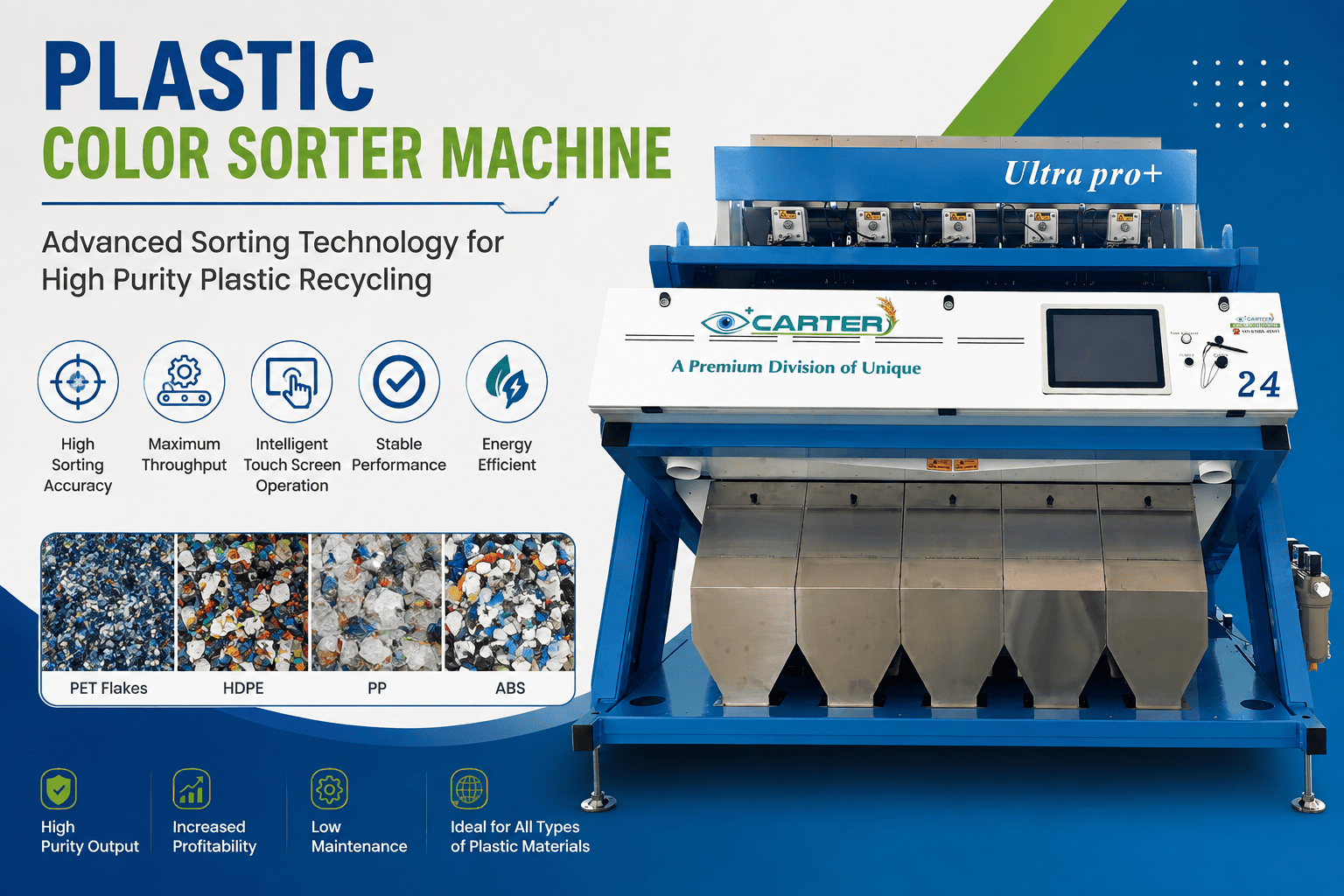
Optical sorting technology is also used in selected plastic recycling applications where different colors or visual characteristics need to be separated.
Investing in a Color Sorter Machine can provide several advantages for processing businesses.
One of the primary benefits is improved product quality. Automated optical inspection can identify unwanted particles that may be difficult to detect consistently through manual sorting.
Computerized image analysis and precision ejection technology enable consistent sorting according to programmed parameters.
Manual sorting requires a significant workforce and continuous attention. An automated Color Sorter Machine can reduce dependence on manual sorting operations.
Automated sorting allows processing operations to continue at a consistent pace, helping businesses improve overall production efficiency.
Manual sorting can vary according to operator experience, concentration, and working conditions. Automated sorting provides more consistent sorting according to configured parameters.
Removing discolored and defective materials can improve the overall appearance of the finished product, which is particularly important for food grains, rice, pulses, seeds, and other consumer products.
By improving sorting accuracy, processors can work toward producing a more consistent finished product and meeting the quality requirements of different markets.
Modern sorting systems are designed with user-friendly controls, allowing operators to monitor and adjust sorting parameters according to the processing requirements.
Carter Sorter Group focuses on providing modern sorting solutions for industries that require accurate and efficient product separation.
Choosing the right Color Sorter Machine is important because sorting requirements vary significantly from one product to another. A machine designed for rice may require different configurations and sorting parameters compared with a machine used for seeds, pulses, grains, nuts, or other materials.
Carter Sorter Group can help businesses identify suitable sorting solutions according to their application requirements.
The key considerations when selecting a color sorter include:
Selecting a machine based on these factors can help processors achieve better long-term performance from their sorting system.
A Color Sorter Machine can be integrated into complete processing plants as an important quality-control stage.
For example, a seed processing plant may include pre-cleaning equipment, elevators, seed cleaners, graders, gravity separators, treating systems, and optical sorting equipment. Similarly, a rice processing facility may use cleaning, destoning, husking, whitening, polishing, grading, and color sorting equipment.
The exact process depends on the product and the desired final quality.
Optical sorting is especially valuable when processors need to maintain a consistent visual standard and remove specific unwanted particles automatically.
Before purchasing a Color Sorter Machine, buyers should carefully evaluate their processing requirements.
First determine what product will be sorted. Rice, seeds, pulses, grains, nuts, coffee, and other materials may require different machine configurations.
The required processing capacity should be considered according to the current production volume and future expansion plans.
Identify exactly which defects need to be removed. These may include discoloration, black particles, damaged material, foreign material, or other unwanted characteristics.
Different products may require different optical configurations, channels, cameras, sensors, and ejection systems.
The available space, electrical requirements, air supply, product feeding system, and connection with existing equipment should be evaluated before installation.
Technical assistance, installation guidance, operator training, spare parts availability, and maintenance support are also important considerations when purchasing industrial sorting equipment.
Regular maintenance helps maintain consistent sorting performance. Operators should follow the manufacturer's recommended maintenance schedule.
Important maintenance activities can include cleaning optical components, checking pneumatic systems, inspecting product channels, maintaining air quality, checking electrical connections, and keeping the machine's working environment clean.
Dust and product particles should be managed properly because processing environments can affect machine performance. Regular inspection can also help identify potential problems before they affect production.
Proper operation and preventive maintenance can contribute to longer equipment life and reliable sorting performance.
The demand for automated sorting solutions is increasing as food processors, agricultural businesses, seed companies, and other industries focus on quality, efficiency, automation, and productivity.
Modern optical sorting technology continues to evolve with improvements in cameras, sensors, image processing, automation, software, and machine-learning-based detection systems.
The future of sorting is expected to focus increasingly on intelligent inspection, improved defect detection, higher processing efficiency, and easier machine operation.
For businesses looking to modernize their processing facilities, investing in an advanced Color Sorter Machine can be an important step toward automation and improved quality control.
A Color Sorter Machine is an important solution for modern agricultural and food processing industries that require efficient, accurate, and consistent product sorting. By using optical inspection, advanced image processing, and precision pneumatic ejection, the machine can separate unwanted materials from the accepted product stream.
From rice and grains to seeds, pulses, nuts, coffee, and selected recycling applications, optical sorting technology can help businesses improve product quality, reduce manual sorting requirements, increase processing efficiency, and achieve greater consistency.
Carter Sorter Group provides Color Sorter Machine solutions for businesses seeking modern and automated sorting technology. Selecting the right machine requires careful consideration of the product, capacity, sorting requirements, defects, installation conditions, and overall processing objectives.
If you are planning to install a new sorting system or upgrade an existing processing plant, choosing the right Color Sorter Machine can help create a more efficient and quality-focused production process.
Copyright © 2025 Carter Unique Group, All Right Reserved.
.jpeg)
 Granules.png)
 Granules.png)
 Granules.png)
 Granules.png)
 Granules.png)


