

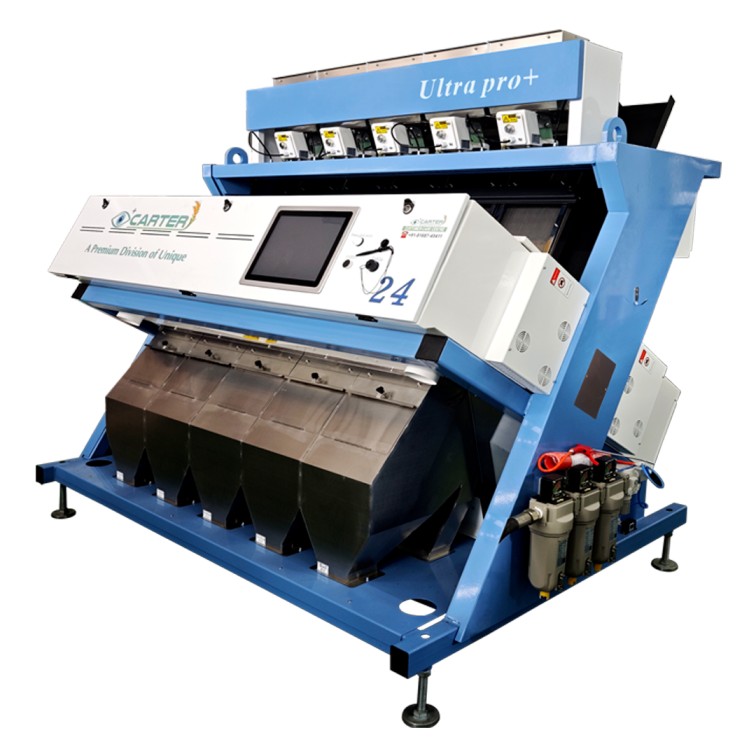
In today's competitive agricultural and industrial processing industries, product quality plays a crucial role in achieving customer satisfaction and market success. Manufacturers are continuously looking for advanced technologies that can improve quality while reducing operational costs. One such revolutionary technology is the Color Sorter Machine.
Color sorter machines have transformed the way industries process rice, grains, pulses, seeds, spices, dry fruits, plastics, and recycled materials. These intelligent machines automatically identify and remove defective products, ensuring superior quality and consistency.
In this guide, we'll explain what a color sorter machine is, how it works, its applications, benefits, and why it has become an essential investment for modern processing industries.
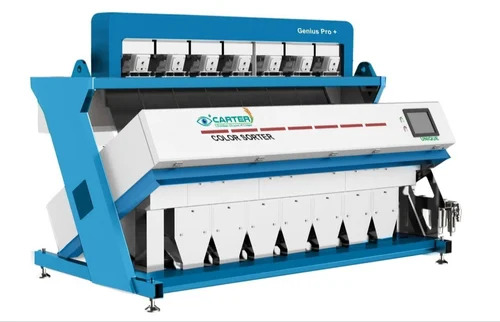
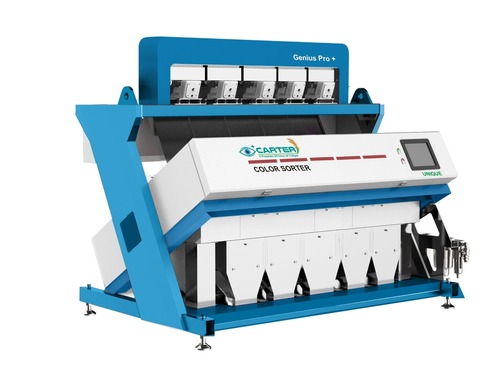
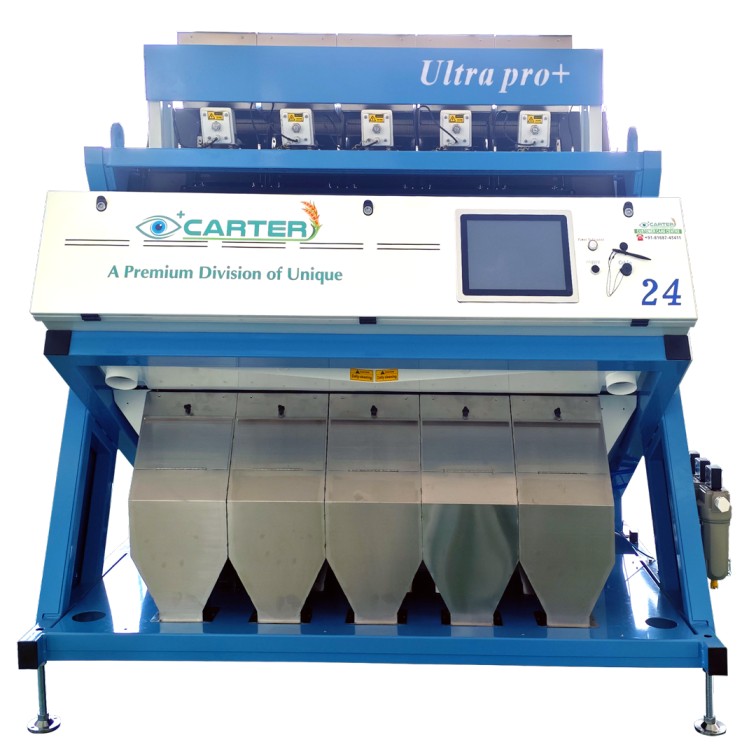
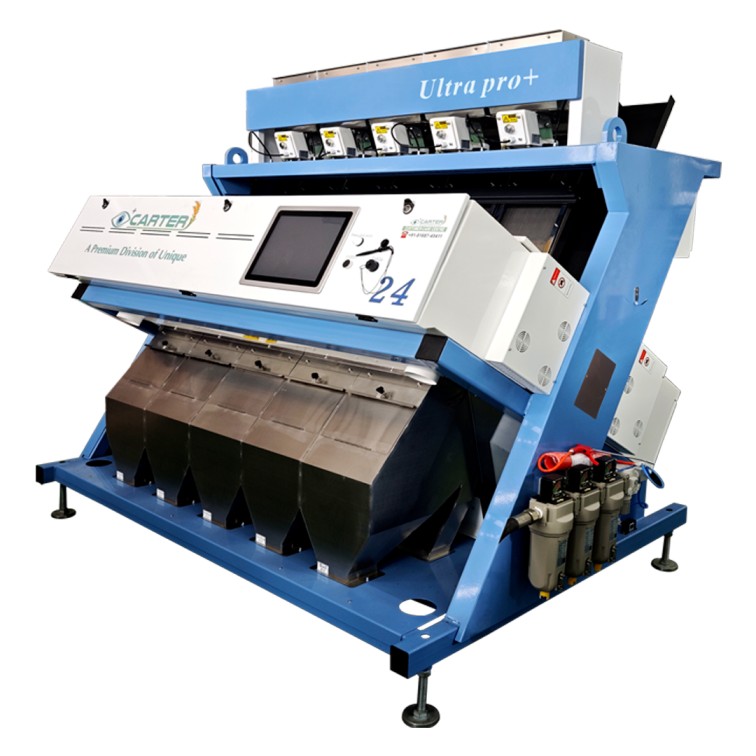
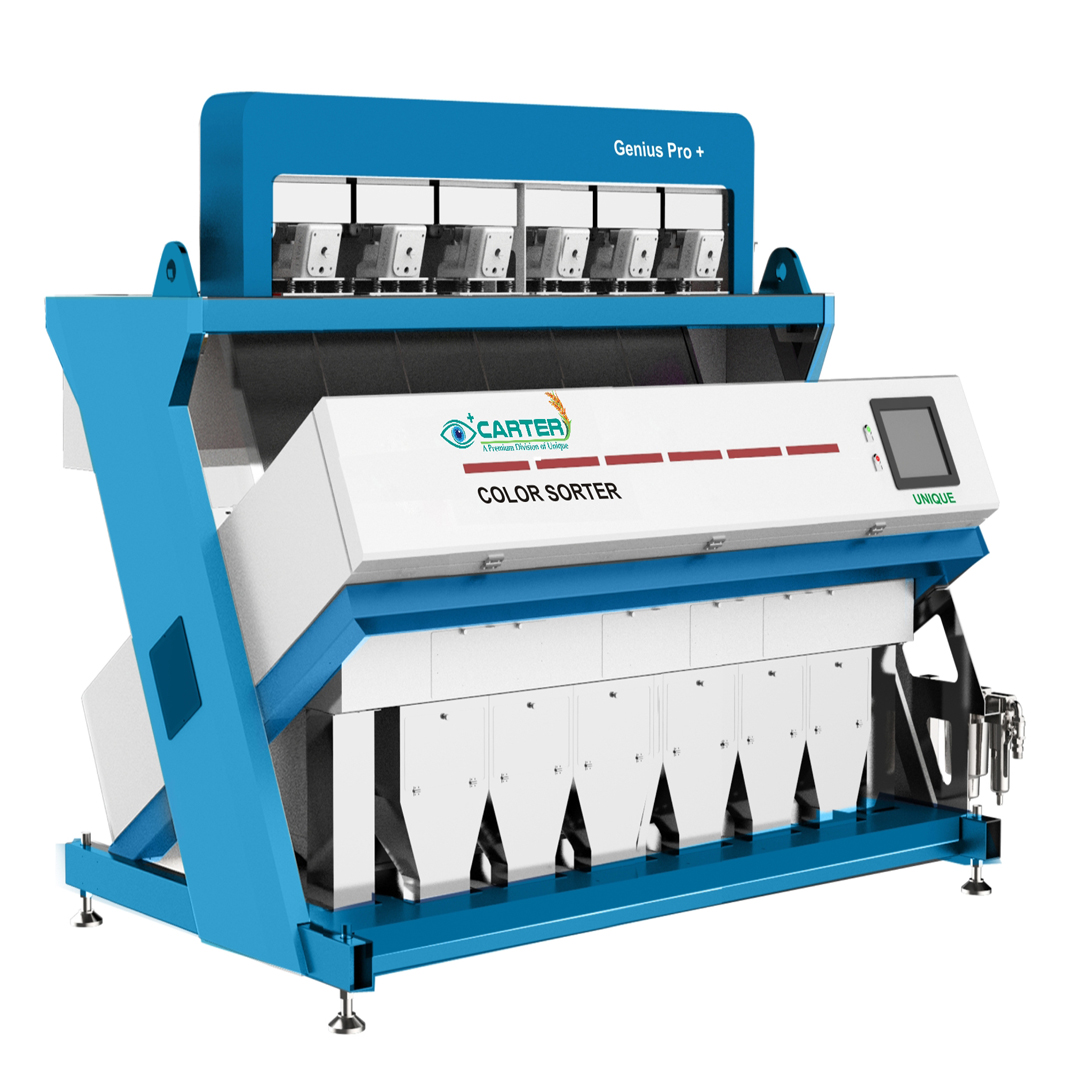
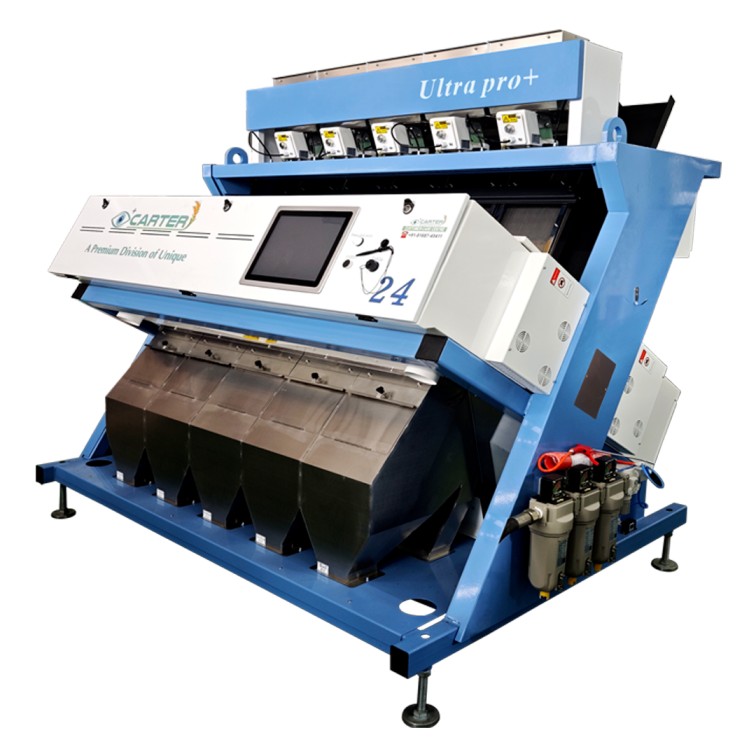
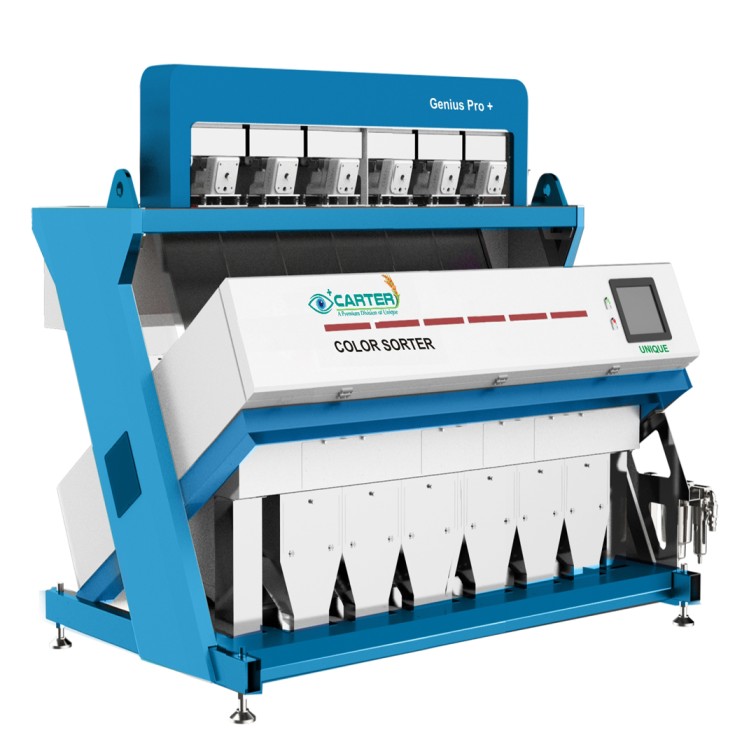
A Color Sorter Machine is an advanced optical sorting system that automatically separates materials based on differences in color, shape, size, texture, and other visual characteristics.
Using high-resolution cameras, LED lighting systems, artificial intelligence (AI), and high-speed air ejectors, the machine detects unwanted or defective materials and removes them from the product stream in real time.
The primary objective of a color sorter is to improve product quality by eliminating:
This automated sorting process significantly reduces manual labor while increasing productivity and accuracy.
In industries such as food processing and agriculture, even small impurities can affect product quality, customer satisfaction, and market value.
Manual sorting can be:
Color sorter machines provide a faster, more accurate, and cost-effective solution.
Benefits include:
✔ Improved product quality
✔ Higher market value
✔ Reduced labor costs
✔ Increased processing efficiency
✔ Better customer satisfaction
✔ Compliance with export standards
The working principle of a color sorter machine involves multiple advanced technologies operating together to achieve precise sorting.
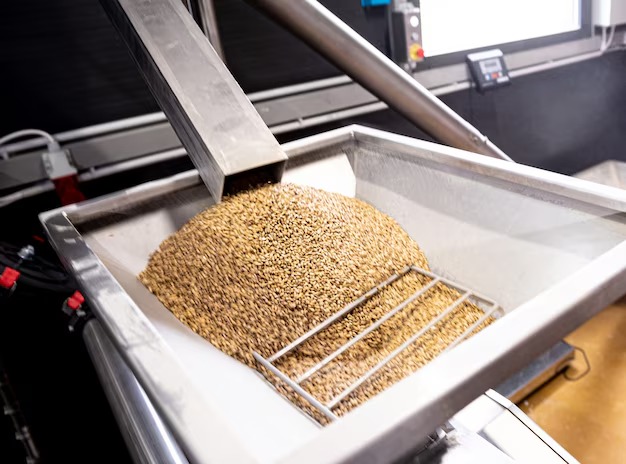
The raw material is fed into the machine through a hopper.
A vibrating feeder distributes the product evenly across multiple channels or chutes.
Uniform distribution ensures accurate inspection of every grain, seed, or particle.
As the material travels down the chute, gravity accelerates the product into a free-fall zone.
This controlled movement allows the machine to inspect each item individually.
The free-fall design helps maximize sorting accuracy.
This is the most critical stage of the sorting process.
Advanced optical sensors capture images of every particle passing through the inspection area.
Modern color sorter machines use:
CCD (Charge-Coupled Device) cameras provide high-quality image detection and are widely used in agricultural sorting applications.
CMOS cameras offer faster image processing and improved detection capabilities.
The machine analyzes red, green, and blue color values to identify defects.
Advanced machines use infrared sensors to detect contaminants invisible to the human eye.
Modern color sorter machines utilize Artificial Intelligence (AI) and machine learning algorithms.
The software compares each product against predefined quality standards.
The system can detect:
AI technology continuously improves sorting performance by learning from processing data.
Once the software identifies defective material, it instantly sends a signal to the rejection system.
This entire process takes only milliseconds.
The machine determines whether the item should be:
Precision air ejectors remove defective products from the material stream.
The ejectors use compressed air to separate unwanted items without affecting nearby good products.
This ensures:
After sorting, the product is separated into:
High-quality material ready for packaging or further processing.
Defective material removed from the production line.
The result is a cleaner, more uniform, and higher-value product.
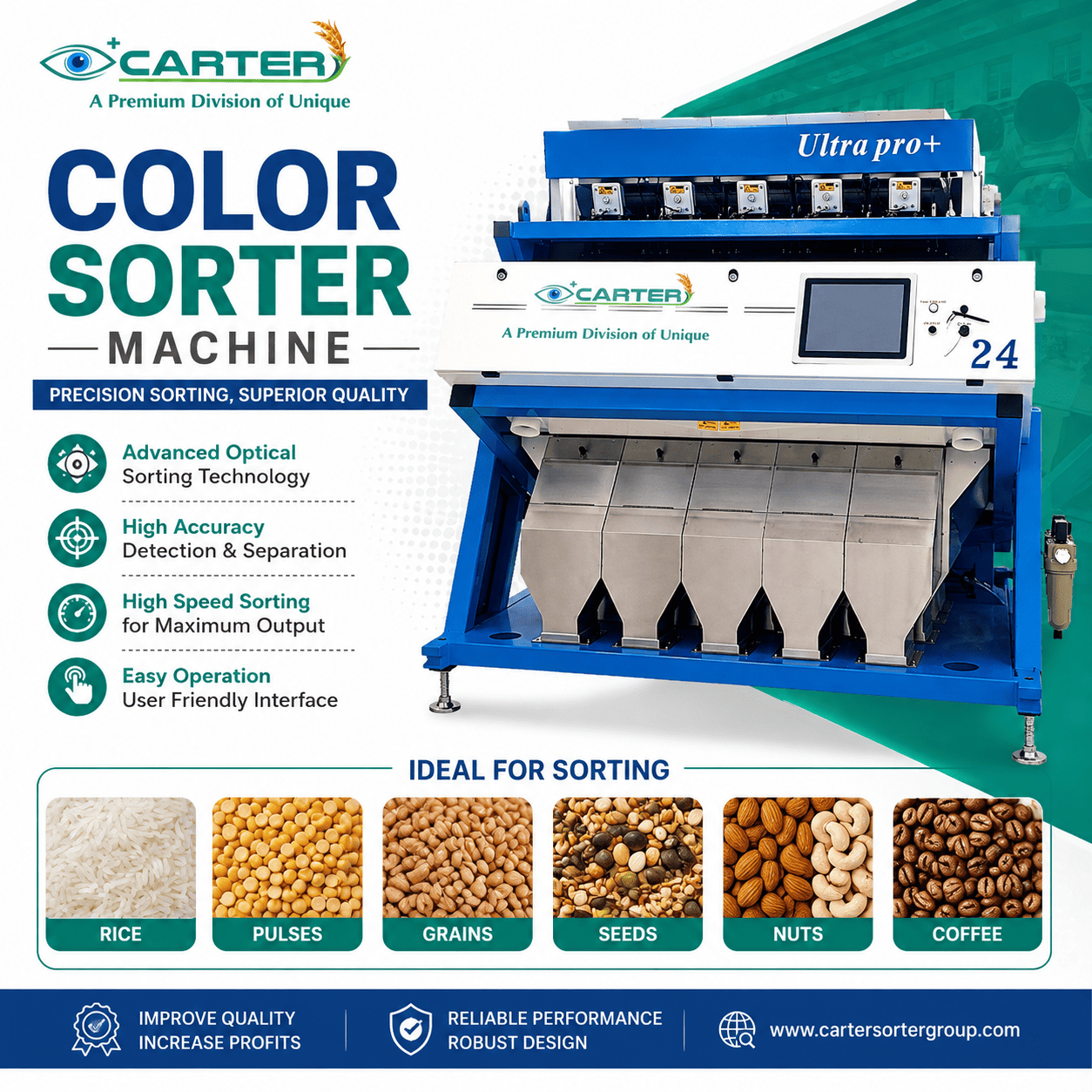
Color sorting technology is used across numerous industries.
Color sorters remove:
Resulting in premium-quality rice suitable for domestic and export markets.
Used for sorting:
The machine removes damaged and discolored pulses.
Seed color sorters improve:
Ensuring high-quality seed production.
Color sorters are widely used for:
To remove contaminants and maintain product consistency.
Spice manufacturers use color sorting for:
Improving product appearance and quality.
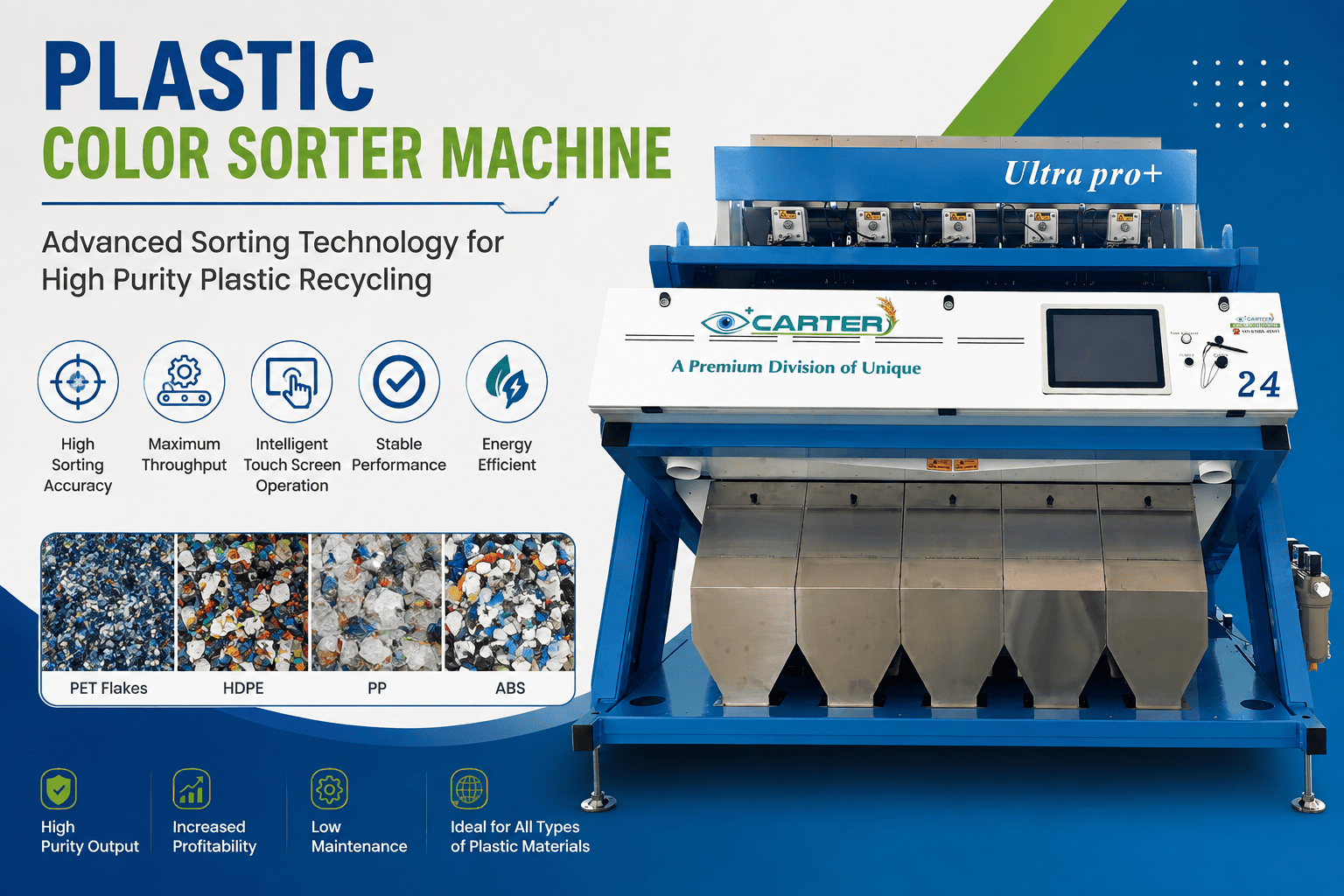
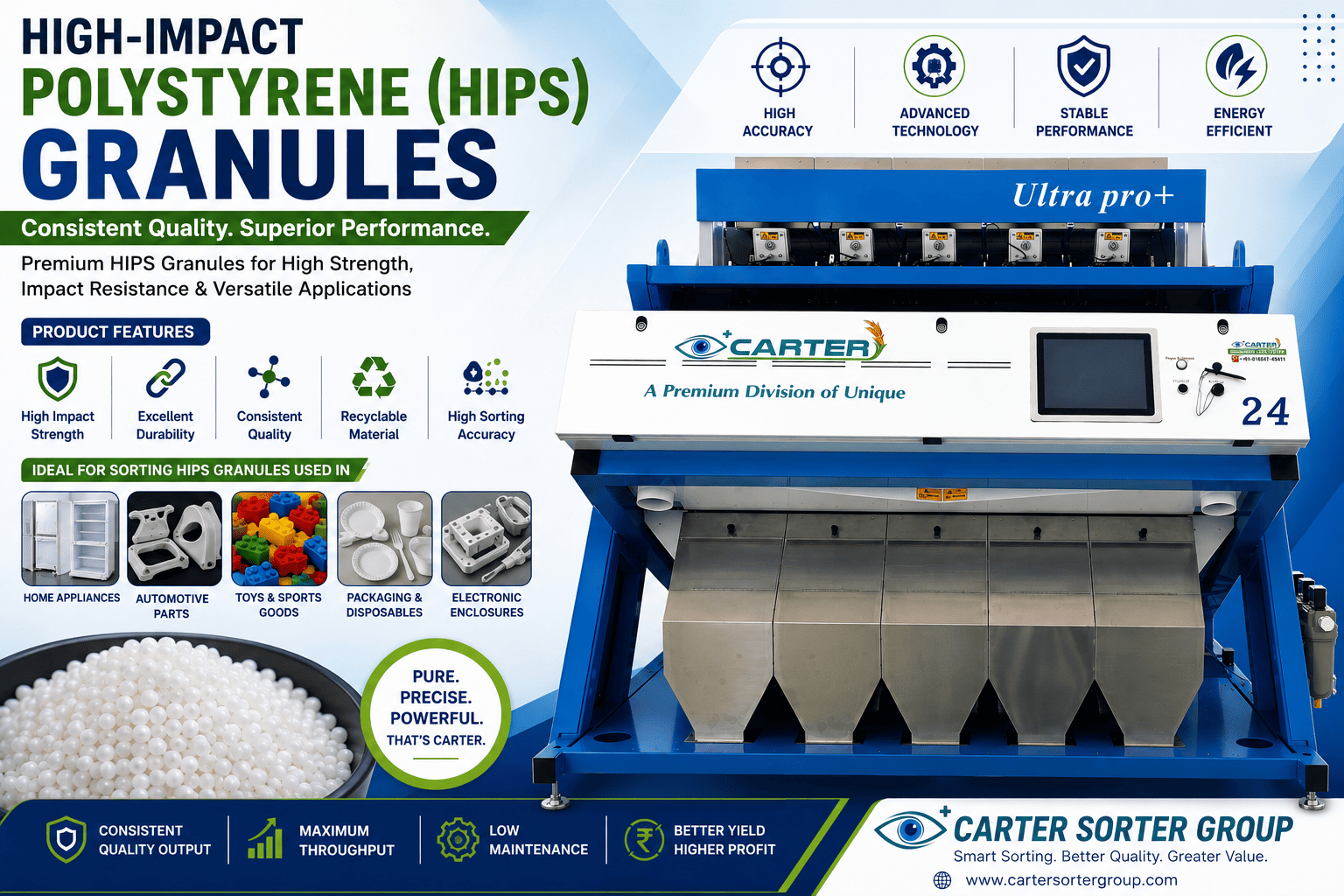
Plastic color sorters separate:
Enhancing recycling efficiency and material value.
Modern machines include advanced features such as:
Improves defect recognition and sorting precision.
Provide accurate visual inspection.
Identifies hidden contaminants.
Simplifies machine operation.
Allows operators to track performance from anywhere.
Reduces operational costs.
Modern machines can achieve up to 99.9% accuracy.
Large volumes can be processed quickly and efficiently.
Automation eliminates extensive manual sorting.
Better product quality commands premium market prices.
Every batch meets the same quality standards.
Many businesses recover their investment within a few years through improved efficiency and reduced wastage.
The future of color sorting is driven by:
Next-generation color sorters will become even more intelligent, offering greater accuracy, predictive maintenance, and real-time quality control.
A Color Sorter Machine is one of the most important innovations in modern agricultural and industrial processing. By combining optical imaging, AI technology, and high-speed ejection systems, these machines ensure exceptional product quality, increased productivity, and reduced operating costs.
Whether you process rice, pulses, grains, seeds, spices, or plastics, investing in a modern color sorter machine can significantly improve efficiency and profitability. As quality standards continue to rise across industries, color sorting technology will remain a key driver of operational excellence and business growth.
Copyright © 2025 Carter Unique Group, All Right Reserved.
.jpeg)
 Granules.png)
 Granules.png)
 Granules.png)
 Granules.png)
 Granules.png)


