


Nylon, also known as Polyamide (PA), is an important engineering thermoplastic widely used in automotive components, electrical and electronics products, textiles, industrial parts, packaging, consumer products, and other demanding applications.
Nylon (PA) flakes are produced by shredding, crushing, or grinding nylon plastic waste into smaller pieces. These flakes can be sorted, cleaned, dried, and further processed into recycled nylon granules or compounds.
Polyamides include different grades such as PA6 and PA66, which have similar appearances but can have different material characteristics. BASF identifies PA6 and PA66 among its major polyamide materials, while PA6 is described as tough and hard with good shock resistance and processability.
In nylon recycling, sorting is particularly important because different polyamide grades, colors, fillers, and other plastics can occur within the same waste stream. A plastic color sorter machine can help separate suitable nylon flakes according to color and optical characteristics, while specialized material-identification technology may be required when the objective is to distinguish PA6 from PA66 or from other polymers.
For recycling companies and plastic processors, automated sorting can improve material consistency, reduce manual inspection, and support more efficient recycling operations.
Nylon is the common name used for a family of polyamide thermoplastics. Important commercial types include PA6 and PA66.
Nylon flakes are small pieces of nylon material produced by mechanically reducing larger plastic products, production scrap, or waste.
Common sources of nylon flakes include:
After shredding or grinding, the resulting flakes can be sorted according to color, material type, contamination, and other characteristics.
The quality of nylon flakes depends on the original polymer grade, additives, fillers, reinforcement, contamination, moisture, particle size, and processing history.
PA6, or Polyamide 6, is one of the most widely used polyamide materials.
It is known for toughness, hardness, shock resistance, and good processing characteristics.
PA6 can be found in applications including:
PA66, or Polyamide 6.6, is another important engineering polyamide.
It is used in applications where mechanical and thermal performance are important.
PA66 can be found in:
Some nylon components contain reinforcement materials such as glass fiber or mineral fillers.
These materials need to be considered separately when developing a recycling and sorting process.
Nylon waste can be available in many colors, including:
A color sorting machine can be useful when color separation is required.
One of the important challenges in nylon recycling is distinguishing different polyamide grades.
PA6 and PA66 can have similar visual characteristics, and visual inspection alone may not reliably distinguish them. BASF's trinamiX has specifically developed near-infrared spectroscopy for differentiating PA6 and PA66 because their similar properties can make visual separation difficult.
This means that a color sorter machine should not automatically be considered a polymer-identification machine.
If the recycling objective is:
Black Nylon → White Nylon → Blue Nylon
optical color sorting may be appropriate.
If the objective is:
PA6 → PA66
then additional polymer-identification technology may be required.
This distinction is important when selecting a Nylon color sorter machine.
Nylon is widely used as an engineering plastic because of its useful combination of mechanical and processing properties.
Depending on the specific grade, nylon can offer:
BASF describes its Ultramid polyamides as offering high mechanical strength, stiffness, and thermal stability across its polyamide portfolio.
The actual performance of recycled nylon depends on polymer grade, moisture, additives, fillers, reinforcement, contamination, and previous thermal processing.
Nylon is used across many industries.
Nylon is widely used for selected automotive components.
Applications may include:
Glass-fiber-reinforced polyamides can be used in demanding engineering applications where additional stiffness and thermal performance are required.
Nylon can be used for:
Polyamide fibers are widely used in textile applications.
Nylon can be processed into:
BASF, for example, lists PA6 applications in high-end polyamide carpets and highlights properties including robustness, longevity, color variety, and recyclability.
Nylon is used in:
Selected nylon grades are used in:
A typical nylon recycling process can involve:
Collection → Preliminary Sorting → Shredding → Cleaning → Separation → Drying → Optical Sorting → Extrusion → Filtration → Pelletizing
Let's look at these stages.
Nylon waste is collected from manufacturing facilities, recycling plants, industrial sources, automotive waste, textile streams, and other suitable sources.
Large contaminants and clearly unsuitable materials are removed.
Nylon components are reduced into smaller pieces.
Depending on the feedstock, the material may be cleaned to remove:
Other plastics and unwanted materials can be separated using appropriate technologies.
Moisture management is particularly important for nylon processing because polyamides are moisture-sensitive materials.
Where color separation is required, a plastic color sorter machine can inspect the flakes and separate selected colors.
Sorted nylon material can be melted and processed through an extruder.
Suitable melt filtration can help remove remaining solid contaminants.
The processed material can be converted into recycled nylon pellets or granules.
Color consistency can be important when recycled nylon is used to manufacture visible components or when separate color streams have different commercial values.
A nylon recycling stream can contain:
If these materials are processed together, the resulting recycled material can have inconsistent appearance.
A Nylon color sorter machine can help separate these materials according to their optical characteristics.
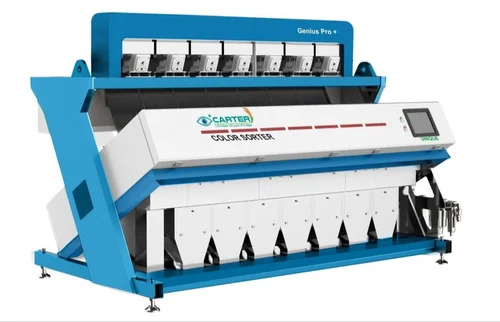
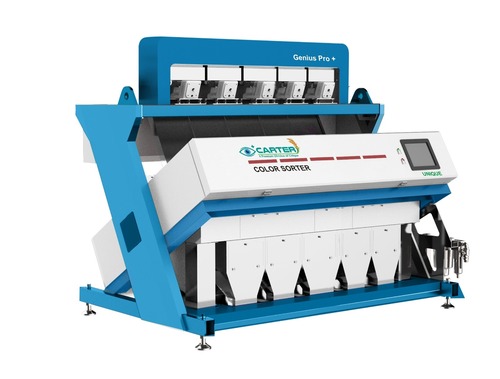
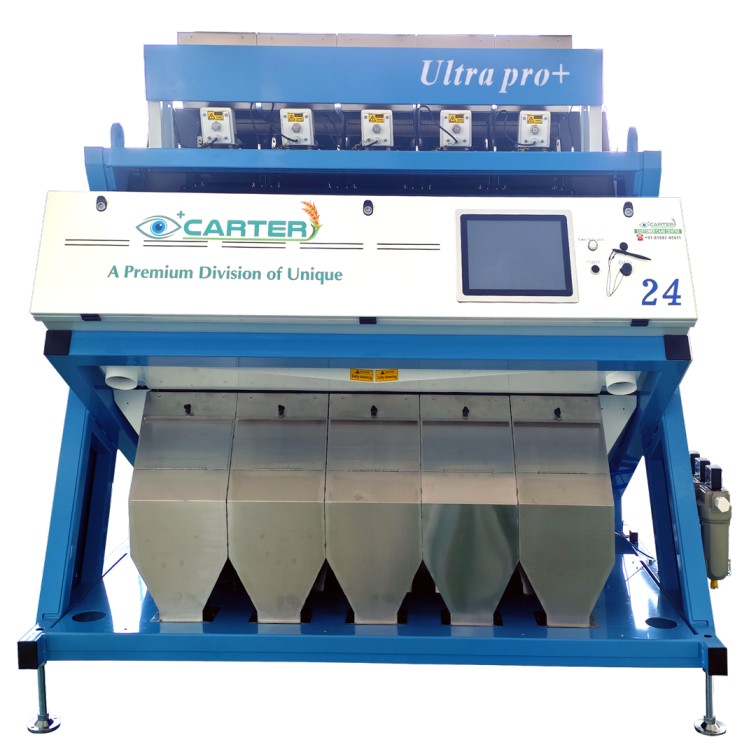
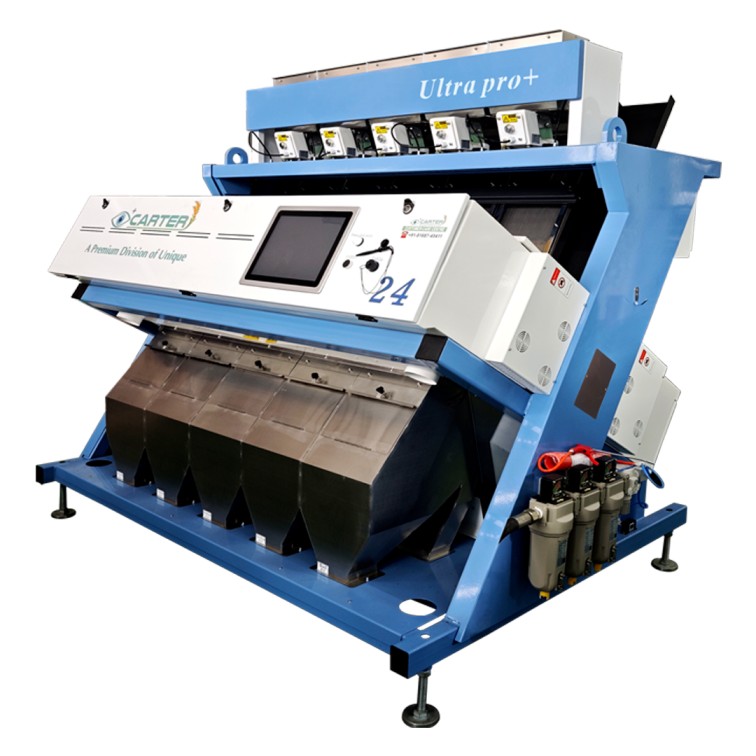
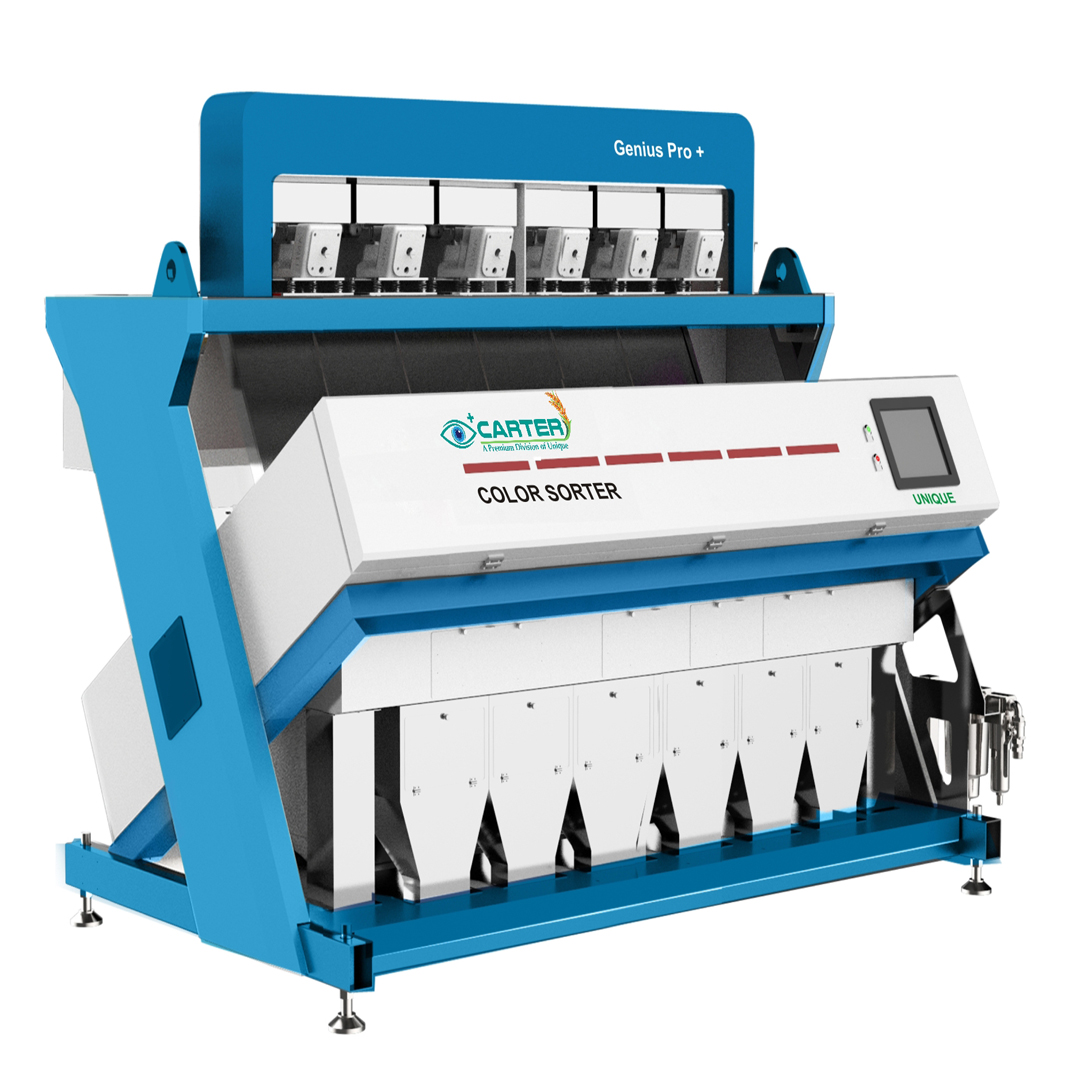
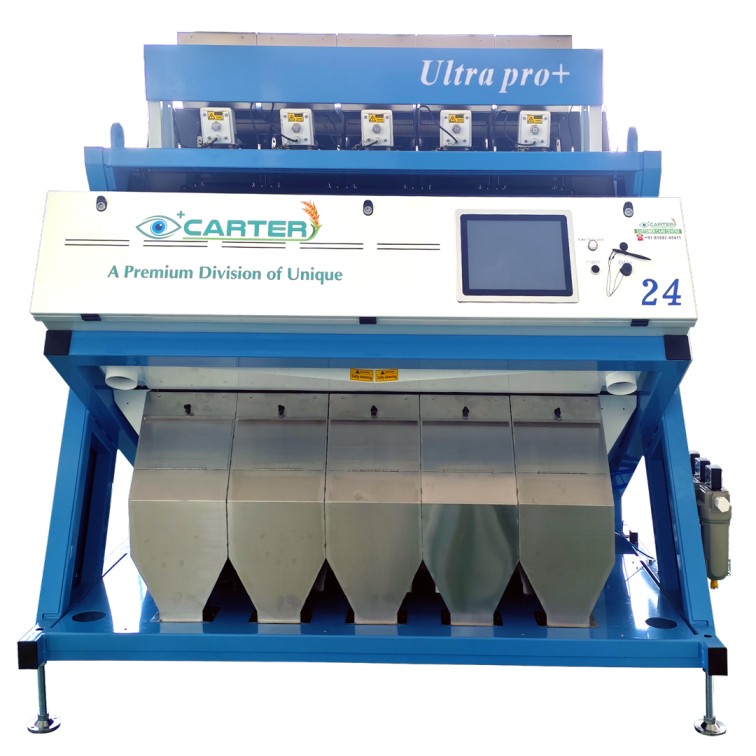
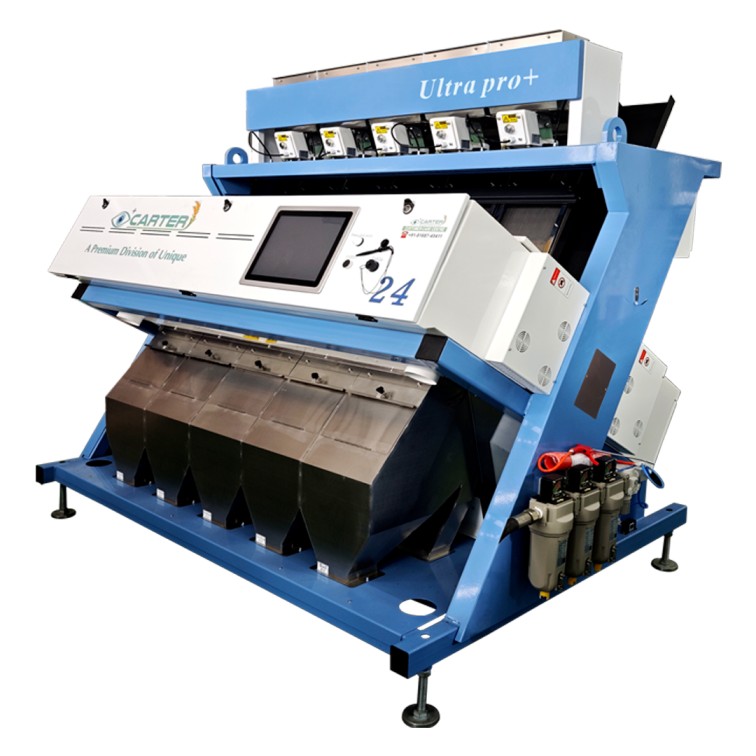
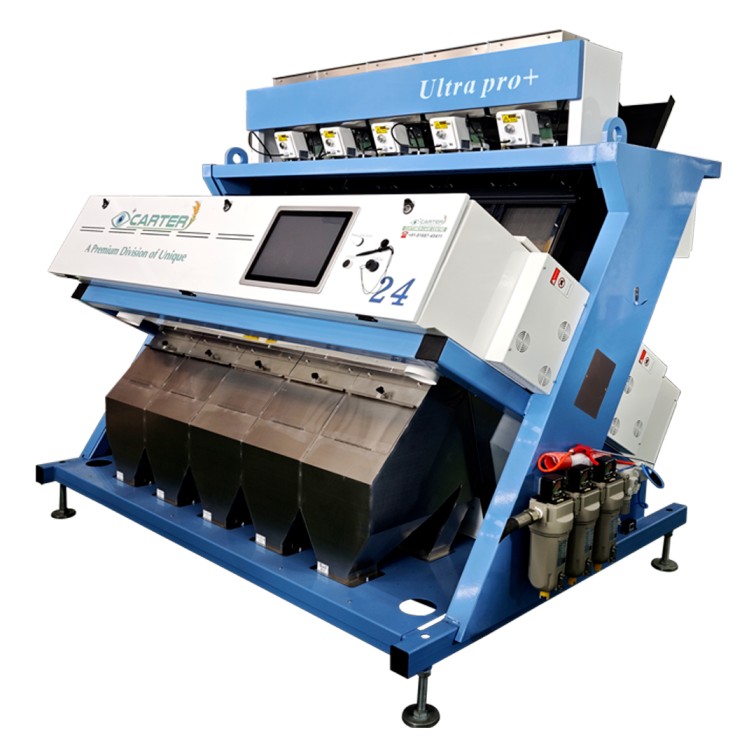
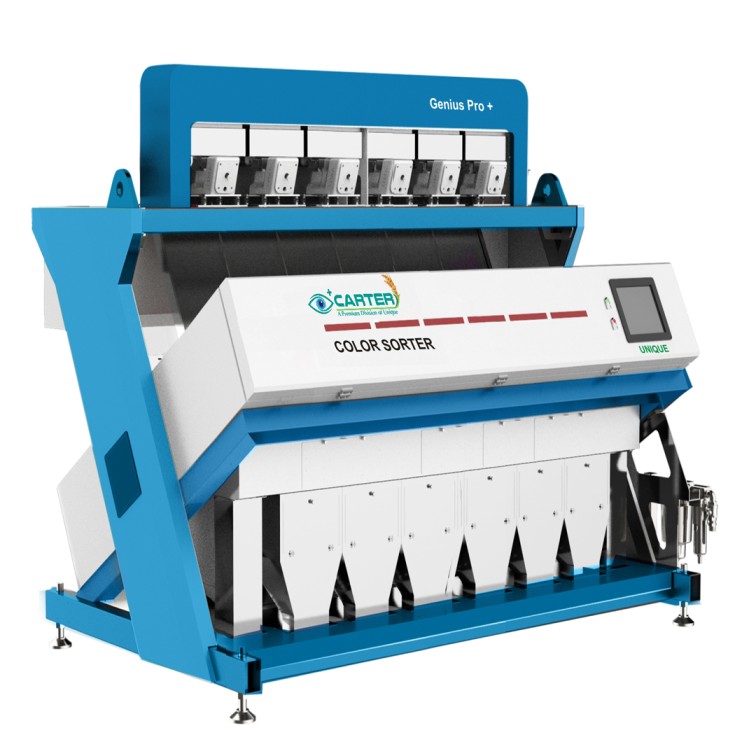
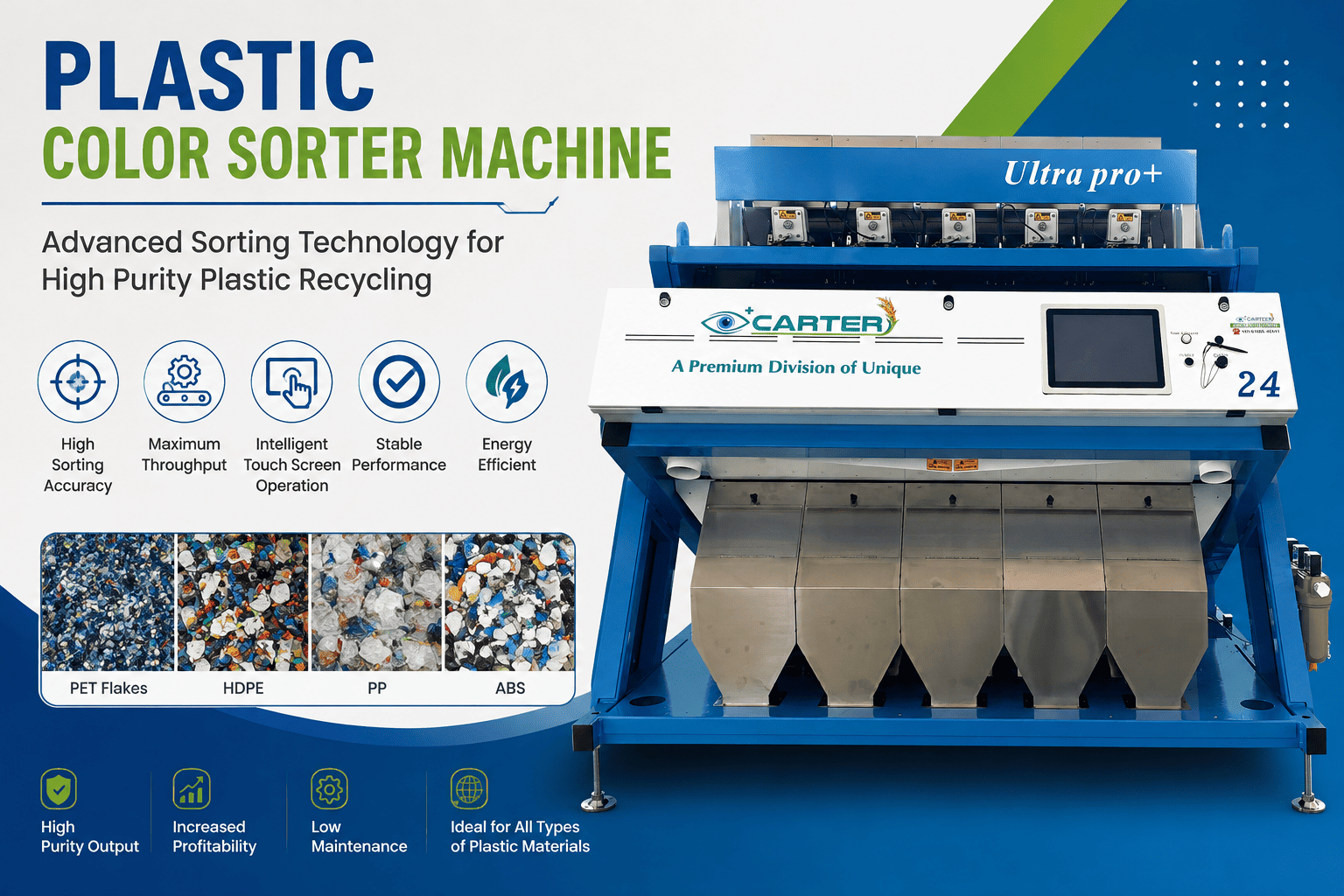
A plastic color sorter machine is an automated optical sorting system that identifies differences in plastic particles and separates selected material according to configured sorting parameters.
Depending on the machine configuration, it may use:
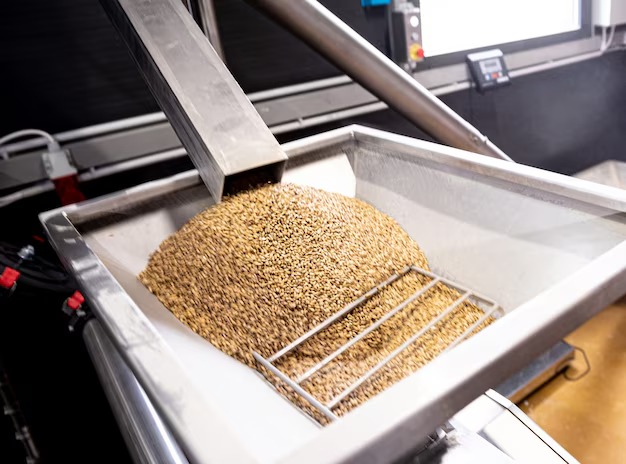
During operation, nylon flakes pass through an inspection area.
The system detects particles that differ from the selected color criteria and activates pneumatic ejectors to remove them from the accepted material stream.
A typical sorting process involves several stages.
Nylon flakes are supplied to the machine through a controlled feeding system.
The flakes are distributed into an organized material stream.
Cameras and sensors inspect the flakes and detect differences in color and appearance.
The control system processes the optical information according to configured sorting parameters.
Unwanted particles are removed using pneumatic air jets.
Accepted nylon flakes and rejected material are collected separately.
The actual sorting performance depends on factors such as:
A material sample test is therefore recommended before selecting equipment.
Automated sorting can help produce more uniform nylon material streams.
Optical automation can reduce dependence on manual visual inspection.
Suitable material streams can be inspected continuously.
Removing unwanted colors can improve the consistency of suitable recycled nylon.
Consistent color feedstock can help improve the appearance of finished products.
Automated systems can apply configured sorting parameters consistently.
Efficient sorting can help recover valuable nylon material from mixed streams.
Nylon recycling is becoming increasingly important as manufacturers and recyclers seek ways to recover valuable engineering plastics.
BASF has demonstrated mechanical and solvent-based recycling approaches for polyamide materials. Its recent work includes recovering PA6 from complex automotive shredder residue and converting it into recycled plastic suitable for demanding applications.
Polyamide recycling can involve different technologies depending on the waste stream.
For suitable mechanically recyclable streams, a process can include:
Sorting → Shredding → Cleaning → Drying → Optical/Material Separation → Extrusion → Filtration → Pelletizing
For more complex waste streams, other technologies such as solvent-based recycling or depolymerization may be considered.
This makes proper sorting and material identification increasingly important.
This is one of the most important considerations when selecting a Nylon color sorter machine.
A color sorter is suitable for separating material according to optical/color differences.
For example:
Mixed Nylon → Black Nylon + White Nylon + Blue Nylon
Polymer identification is used when different plastic types or grades need to be distinguished.
For example:
PA6 → PA66
or:
Nylon → PP → ABS → PET
These applications may require specialized sensing technologies.
Since PA6 and PA66 can look very similar, optical color sorting alone should not be presented as a reliable method for separating these two grades. Near-infrared spectroscopy is one example of technology used to differentiate them.
The quality of nylon flakes can significantly affect downstream processing.
Important parameters include:
For engineering applications, controlling these factors can be especially important because recycled material may need to meet specific performance requirements.
Before purchasing a plastic color sorter machine for Nylon flakes, manufacturers and recyclers should evaluate several factors.
Determine whether the material is:
Determine the minimum and maximum particle size.
Identify the colors that need to be separated.
Check the quantity of other polymers and foreign materials.
Determine whether the material contains:
Nylon's moisture sensitivity makes proper drying and handling important.
Define the desired color consistency and material purity.
Select a machine according to the required throughput.
Clearly define whether the requirement is:
A material sample test can help determine the appropriate machine configuration.
Automated sorting can provide several advantages over purely manual inspection.
The machine can continuously inspect suitable nylon flakes.
Automation can reduce the amount of manual visual inspection.
Configured sorting parameters can be applied repeatedly.
Suitable sorting can help recover valuable nylon material from mixed streams.
Optical sorting can become an important quality-control stage within a recycling line.
India has a growing plastics processing, engineering plastics, and recycling industry.
Working with an experienced plastic color sorter machine manufacturer in India can provide potential benefits such as:
When evaluating a plastic color sorter machine manufacturer, businesses should consider:
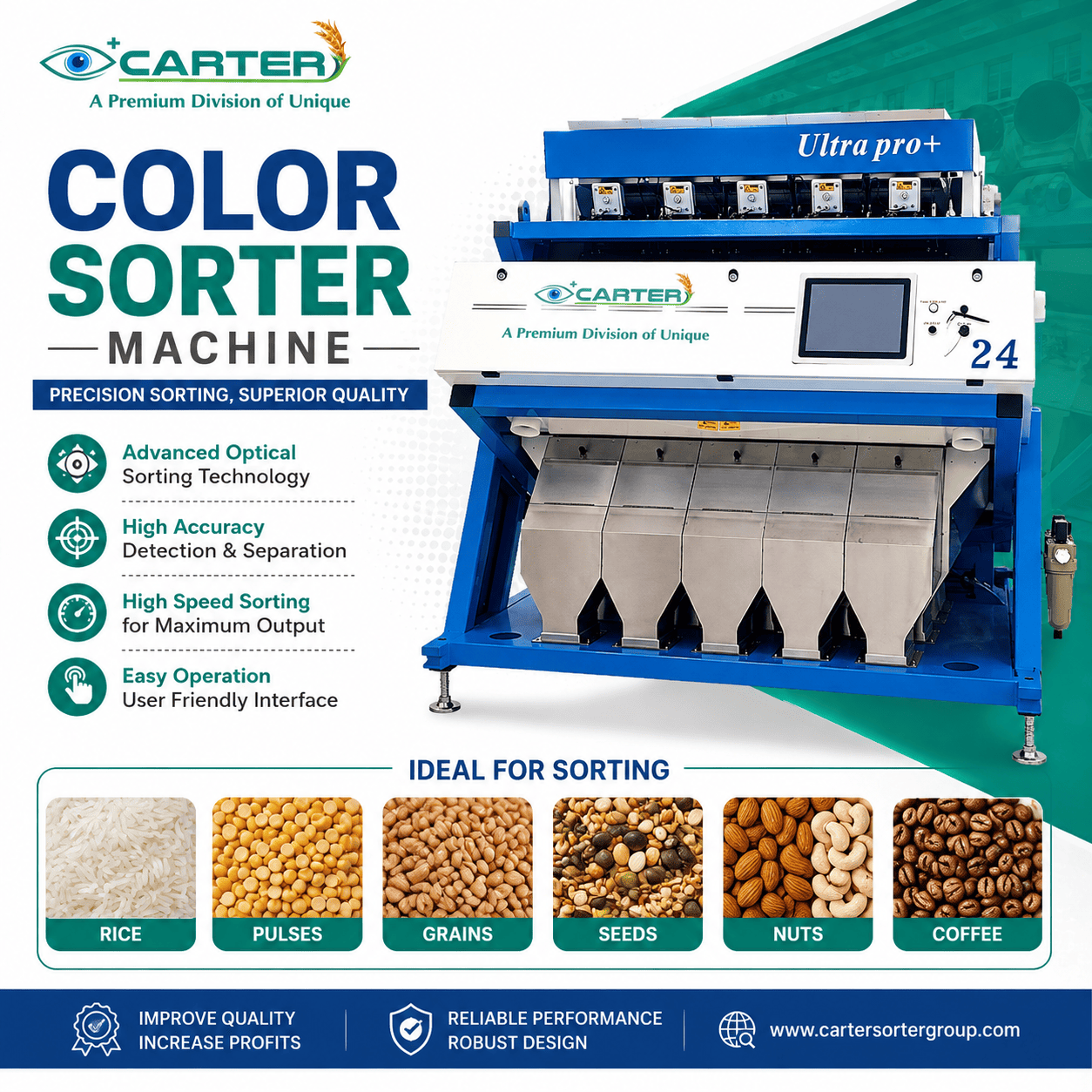
Carter Sorter Group provides sorting solutions for plastic-processing applications.
For suitable Nylon (PA) flakes, a plastic color sorter machine can help automate color-based separation and improve the consistency of material streams.
The appropriate sorting configuration depends on:
For businesses searching for a plastic color sorter machine manufacturer in India, testing the actual nylon material can help identify a suitable sorting configuration.
The recycling industry is moving toward more advanced material identification, automated sorting, and higher-quality recycling processes.
Future nylon recycling systems are expected to increasingly combine:
The combination of accurate sorting and appropriate recycling technology can help recover more valuable polyamide material.
Nylon flakes are small pieces of polyamide plastic produced by shredding, crushing, or grinding nylon waste and production scrap.
Nylon flakes can be used as feedstock for producing recycled nylon materials, depending on their polymer type, purity, contamination, and processing history.
A Nylon color sorter machine is an optical sorting system designed to separate nylon flakes according to color and detectable optical characteristics.
Not reliably through color alone. PA6 and PA66 can look similar, so specialized polymer-identification technology may be needed.
Yes. Suitable nylon waste can be recycled through mechanical and, for certain complex streams, other recycling technologies. BASF has documented recycling approaches for PA6 and other polyamides.
Color sorting can help separate mixed-color nylon flakes and create more consistent material streams for suitable downstream applications.
Consider the PA type, flake size, color variation, contamination, moisture, reinforcement, required output, processing capacity, and whether you need color sorting or polymer identification.
Nylon (PA) flakes are an important source of recyclable engineering plastic and can be recovered from automotive, electrical, industrial, textile, and consumer-product waste.
Because polyamide materials can occur in different grades such as PA6 and PA66, effective sorting requires a clear understanding of the recycling objective. Color sorting can be highly useful when the goal is to separate differently colored nylon flakes, while specialized identification technology may be needed to distinguish similar polyamide grades.
A modern plastic color sorter machine can automate optical inspection, reduce manual sorting, improve color consistency, and support more efficient recycling operations.
For businesses looking for a plastic color sorter machine manufacturer in India, the machine should be selected according to the actual nylon feedstock, including polymer type, particle size, color, contamination, reinforcement, moisture, processing capacity, and required output.
Material sample testing before machine selection is an important step toward achieving reliable Nylon (PA) sorting performance.
Copyright © 2025 Carter Unique Group, All Right Reserved.
.jpeg)
 Granules.png)
 Granules.png)
 Granules.png)
 Granules.png)
 Granules.png)


