

 Granules.png)
Polystyrene (PS) Granules are an important thermoplastic raw material used across packaging, consumer products, electrical components, laboratory products, construction materials and several industrial applications. Available in different grades and forms, polystyrene can be processed into rigid products as well as lightweight foamed materials.
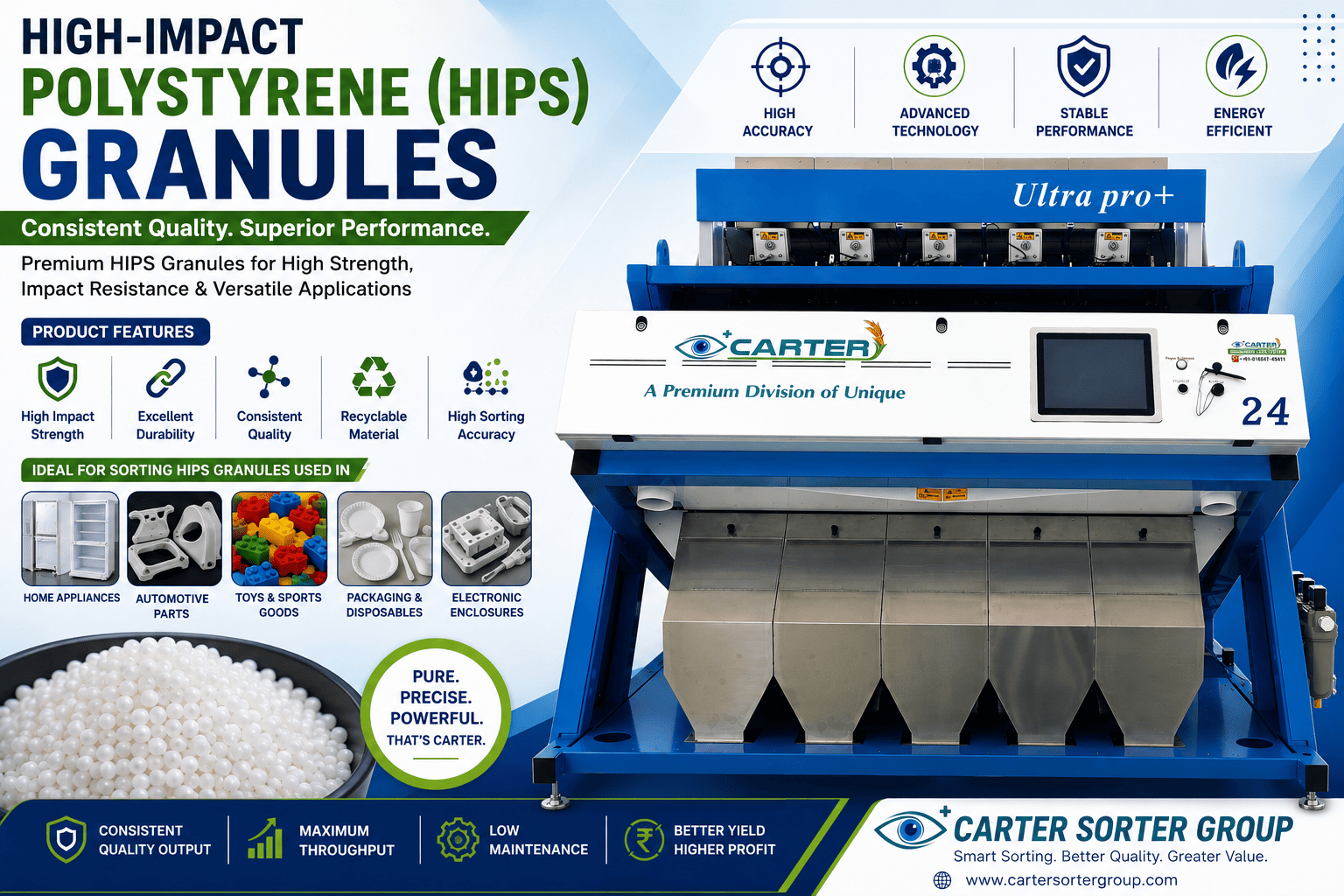
For plastic manufacturers and recyclers, the quality, color, purity and consistency of Polystyrene Granules are important factors. Unwanted colors, black specks, foreign particles and material contamination can affect the appearance and quality of finished plastic products. As production volumes increase, automated sorting technologies such as a Plastic Color Sorter Machine are becoming increasingly useful for quality control.
Polystyrene is commonly identified by resin identification code 6, and commercially important forms include General-Purpose Polystyrene (GPPS), High-Impact Polystyrene (HIPS) and expanded polystyrene (EPS).
For businesses processing plastic granules, modern optical sorting technology can help separate unwanted colors and visible contaminants, supporting cleaner and more consistent material streams.
Polystyrene (PS) Granules are small plastic pellets or particles manufactured from polystyrene resin. They are used as feedstock for processes such as injection molding, extrusion and thermoforming.
Polystyrene is produced from styrene monomers and is an amorphous thermoplastic. General-purpose polystyrene is generally known for its rigidity, transparency, hardness and relatively easy processing.
PS granules may be supplied in natural, transparent, white, black or other colors depending on the grade and intended application. Recycled PS granules can also have different colors and levels of contamination depending on the source material and recycling process.
The term PS Granules covers several different material categories, so buyers should consider the specific grade, processing method, flow behavior, color, purity and application requirements before selecting a material.
Polystyrene is a synthetic polymer made from styrene. Its commonly cited chemical formula is:
(C₈H₈)n
The polymer consists of long carbon chains with phenyl groups attached along the backbone.
Because of its molecular structure, polystyrene provides a combination of rigidity, dimensional stability, transparency and easy processing. However, conventional GPPS is relatively brittle compared with impact-modified grades such as HIPS.
Polystyrene is available in different grades and forms for different applications. The most commonly encountered categories include:
GPPS is generally clear, rigid and relatively brittle. It is commonly selected where transparency, appearance and stiffness are important.
Typical applications include transparent packaging, containers, laboratory products, display components and various molded products.
HIPS is modified with rubber, commonly polybutadiene, to improve impact resistance compared with conventional GPPS.
It is used in products where greater toughness is required.
EPS is a lightweight cellular form of polystyrene used extensively for protective packaging, insulation and other applications where low density and cushioning properties are required.
EPS can be more challenging to collect and transport economically because of its very low density.
XPS is a foam material produced through an extrusion process and is commonly used for thermal insulation and related construction applications.
Therefore, when purchasing or processing Polystyrene Granules, it is important to identify the exact material grade rather than treating all PS materials as identical.
The properties of PS granules vary according to grade, additives, molecular characteristics and manufacturing process. However, conventional polystyrene is generally associated with several important characteristics.
Polystyrene is a relatively rigid thermoplastic. This makes it suitable for products where dimensional stability and structural stiffness are required.
GPPS can provide high optical clarity, making it useful for transparent products and applications where appearance is important.
Polystyrene can be processed using injection molding, extrusion and thermoforming. This processing flexibility contributes to its wide industrial use.
PS has relatively low density, while foamed forms such as EPS are particularly lightweight.
Polystyrene can be produced in natural, transparent and various colored forms. This makes color consistency an important quality consideration for manufacturers producing visible plastic components.
Although GPPS offers rigidity and clarity, it can be relatively brittle. Where higher impact resistance is needed, manufacturers may select HIPS or another suitable modified grade.
Polystyrene granules are used in a broad range of industries because of their processing characteristics and versatility.
PS can be used for different packaging products, including containers, trays, lids and protective packaging.
Its clarity and rigidity can be advantageous for certain packaging applications.
Polystyrene is used in various consumer products and household components. Its ease of molding allows manufacturers to produce products in different shapes and sizes.
Polystyrene can be used in selected electrical and electronic components where its material characteristics are suitable.
Certain laboratory containers and equipment components can be manufactured from suitable PS grades.
PS has historically been used in various disposable food-service and consumer products.
Foamed polystyrene products such as EPS and XPS are widely associated with insulation and construction applications.
Plastic manufacturers can process PS granules into molded components for a variety of industrial applications.
The production process for polystyrene granules begins with styrene and polymerization, followed by processing into a usable resin form.
The exact industrial process varies according to the grade and application, but a simplified sequence can include:
Styrene monomer is prepared according to the required polymer production process.
Styrene undergoes polymerization to form polystyrene.
The polymer is processed into a suitable form for industrial use.
The polymer can be extruded and converted into pellets or granules.
The finished granules are inspected for characteristics such as size, color, contamination, moisture and other grade-specific requirements.
After quality control, the granules are packed and prepared for transportation to plastic processors.
For recycled PS, the process can instead involve collection, sorting, size reduction, washing, drying, extrusion and regranulation.
For manufacturers producing visible plastic components, color consistency can be extremely important.
A batch of PS Granules may contain:
Even a relatively small amount of unwanted material can affect the appearance of a finished molded product.
This is particularly relevant for transparent and light-colored PS products, where contamination or color variation may be easily visible.
For this reason, manufacturers and recyclers can use sorting equipment as part of their material preparation and quality-control process.
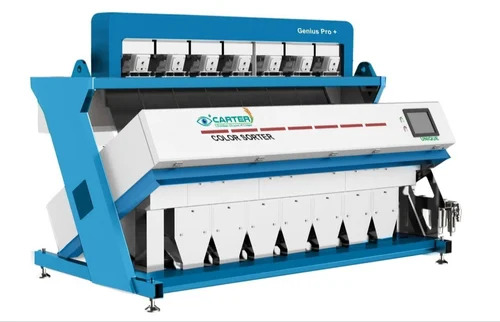
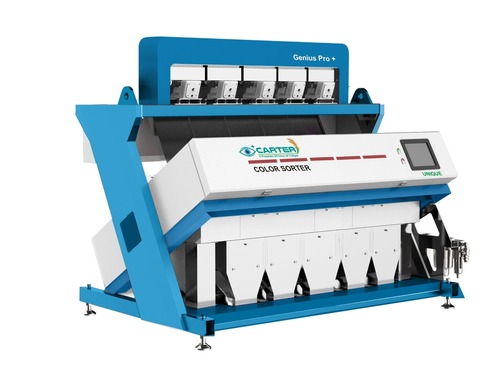
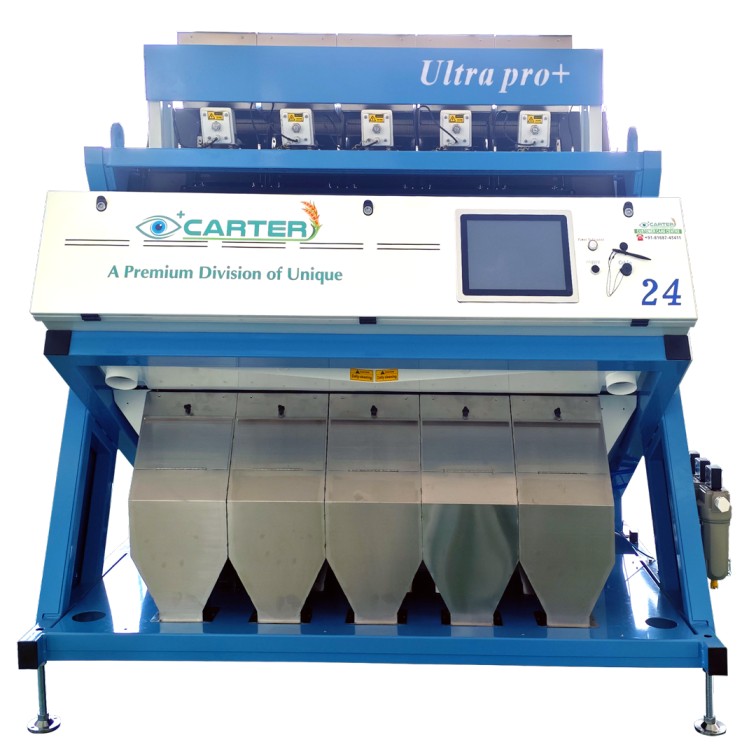
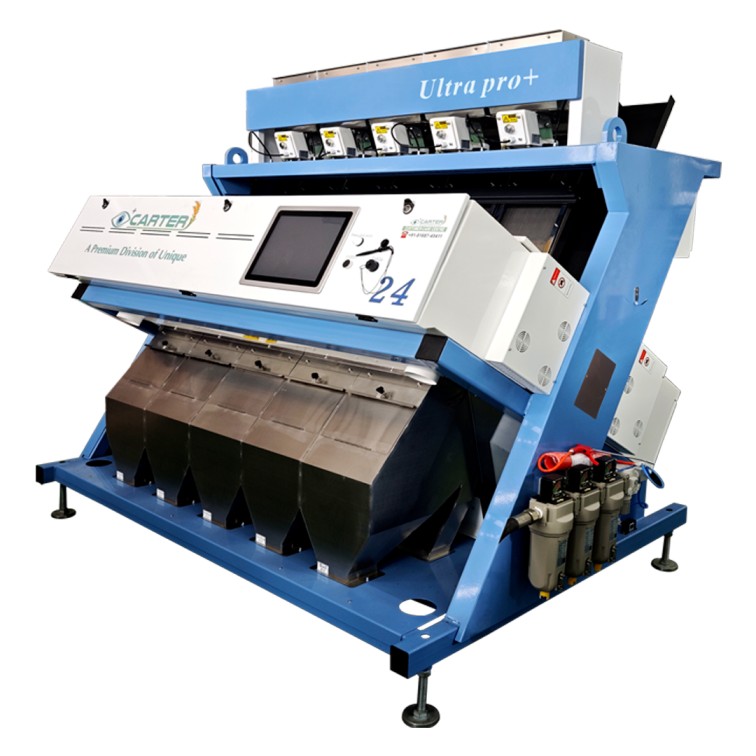
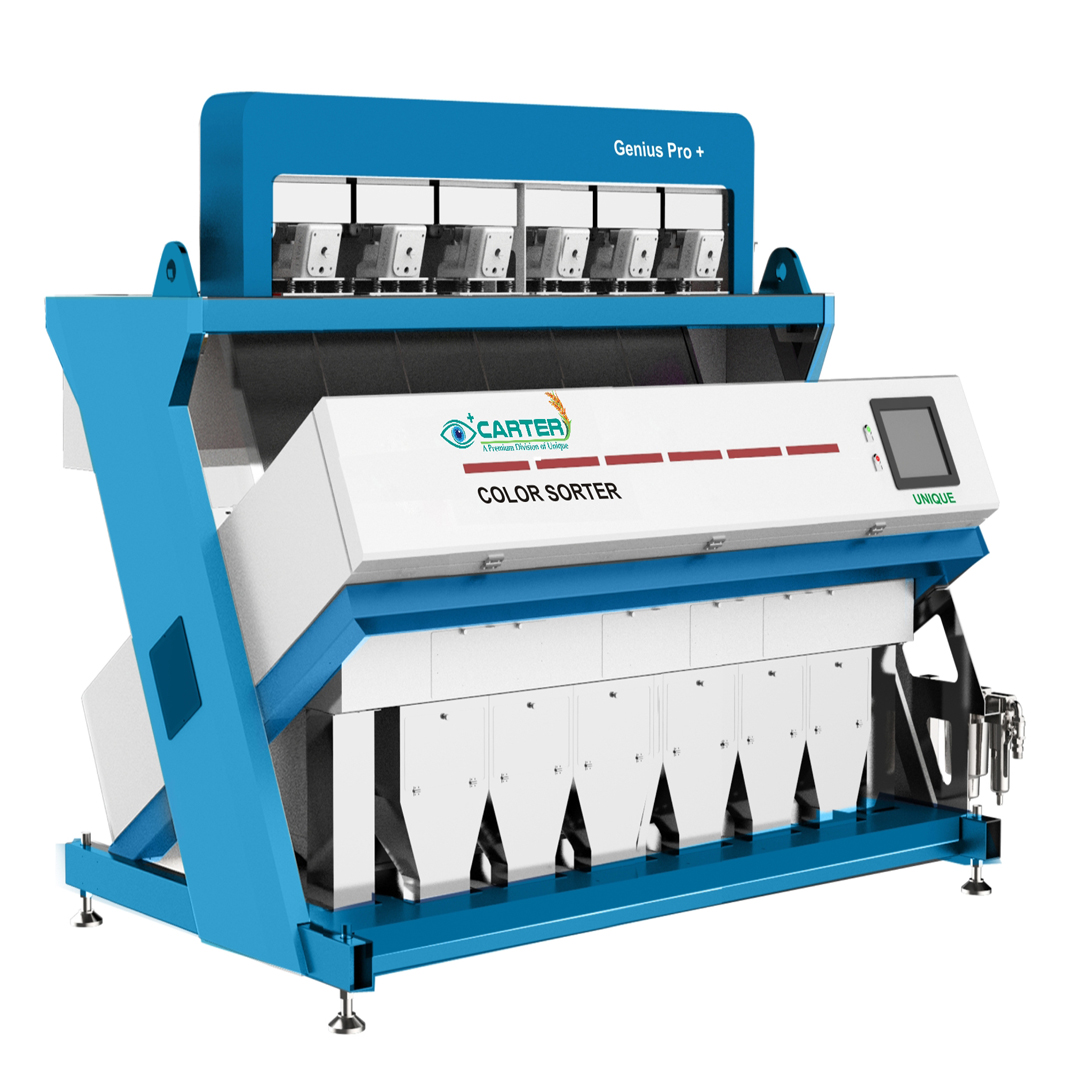
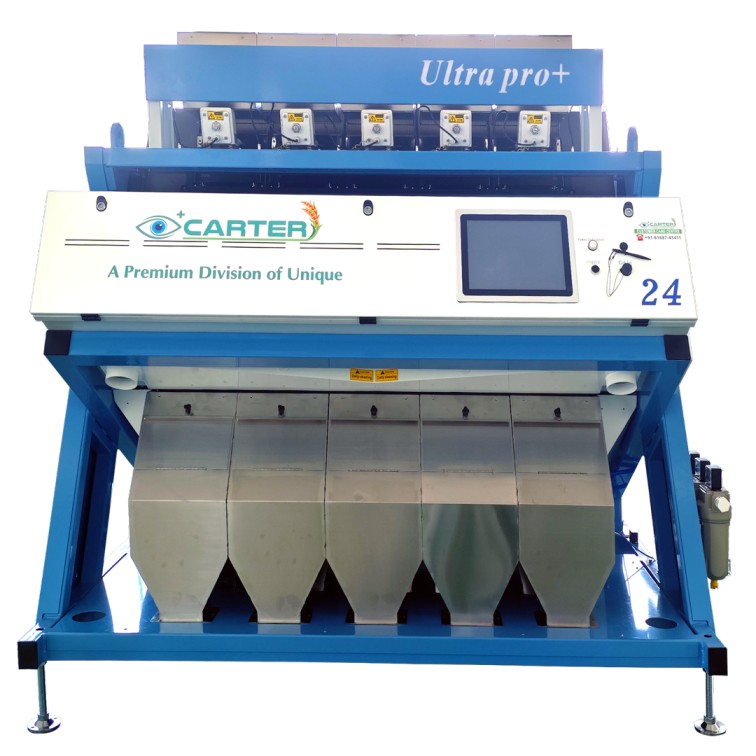
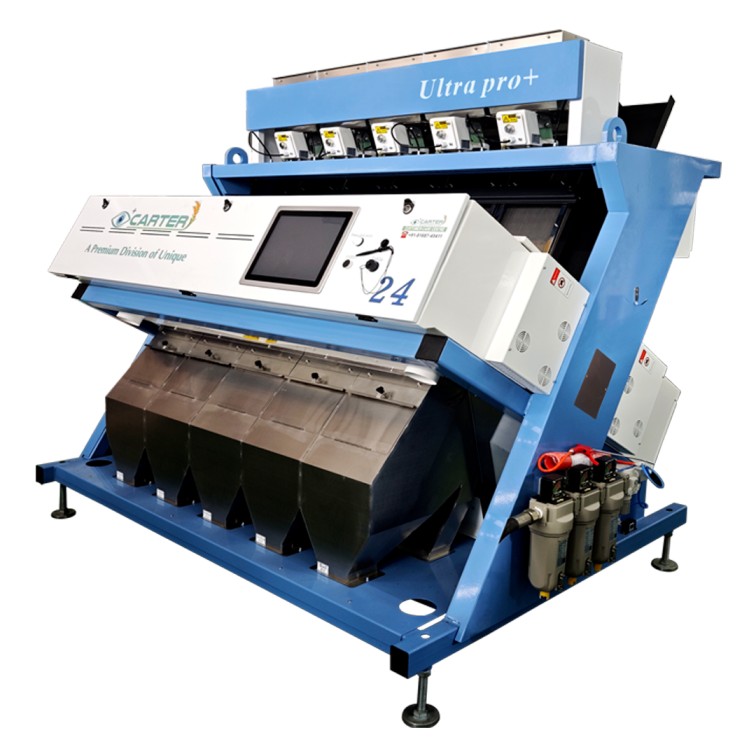
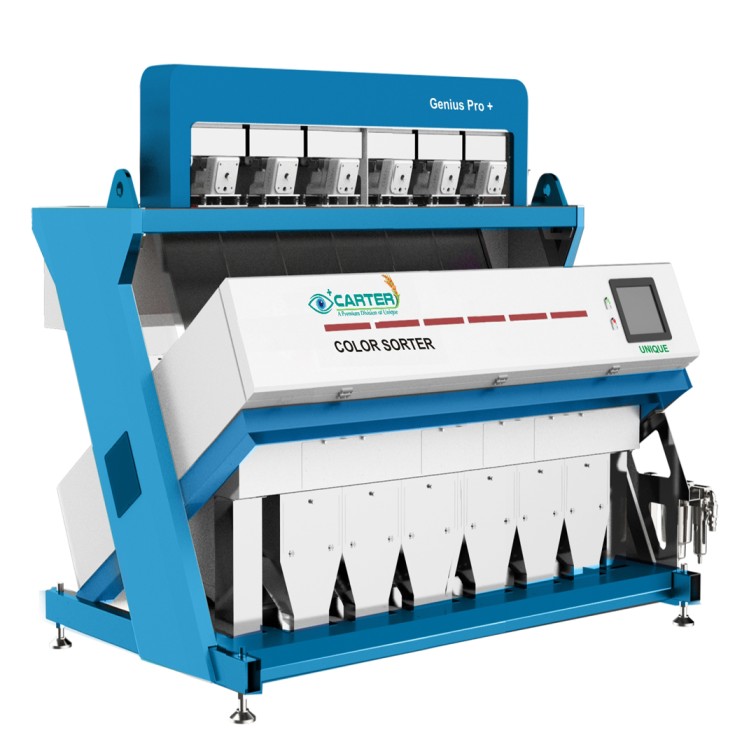
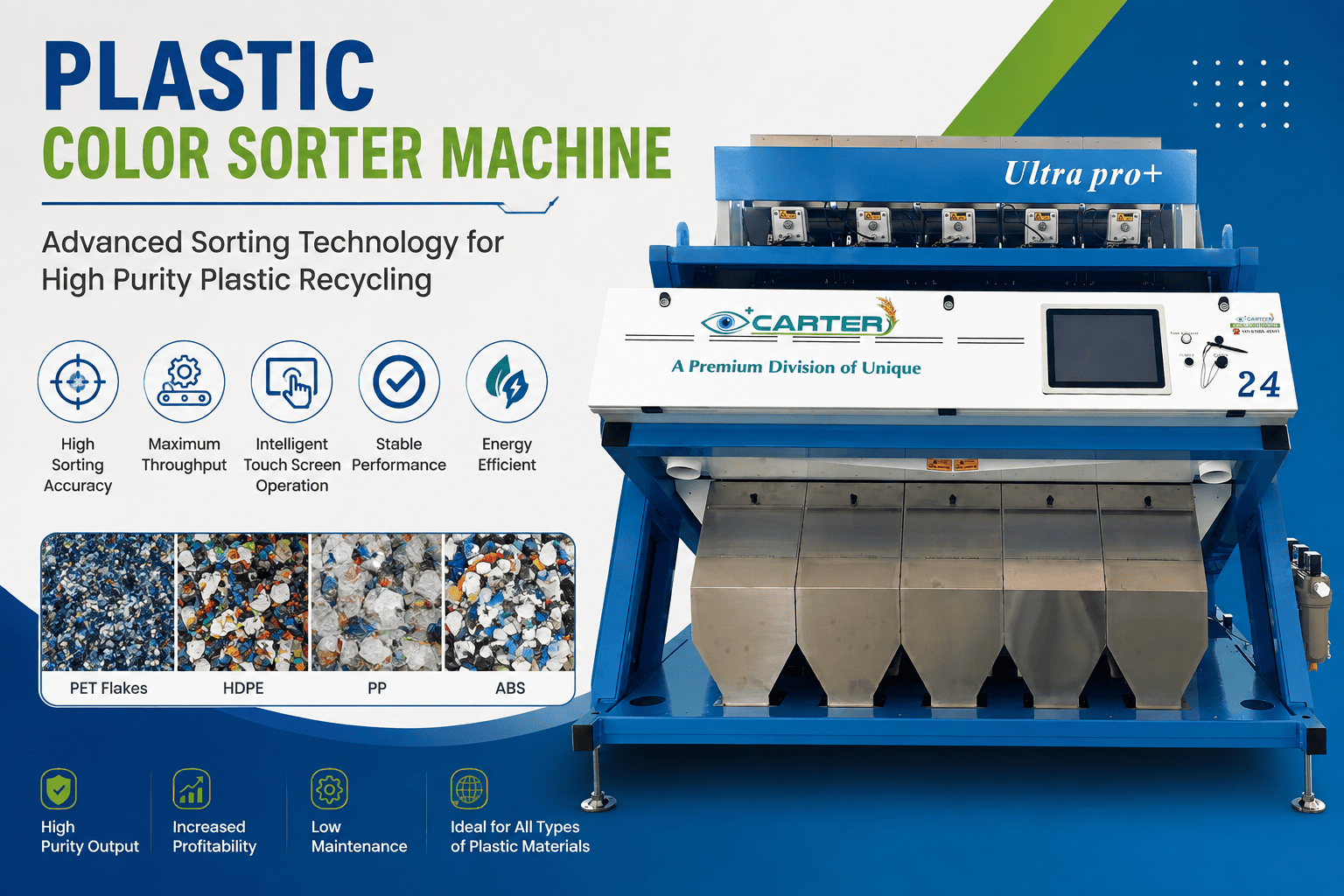
A Plastic Color Sorter Machine is an automated optical sorting system designed to inspect plastic materials and separate unwanted particles according to programmed sorting criteria.
Instead of depending entirely on manual visual inspection, an optical sorter uses cameras, sensors, image-processing technology and pneumatic ejection to examine material moving through the machine.
For suitable PS granule applications, the machine can be configured to identify visible color differences and reject selected unwanted particles.
The exact sorting capability depends on factors such as particle size, material condition, color contrast, transparency, feeding arrangement and machine configuration.
A modern Plastic Color Sorting Machine generally works through several stages.
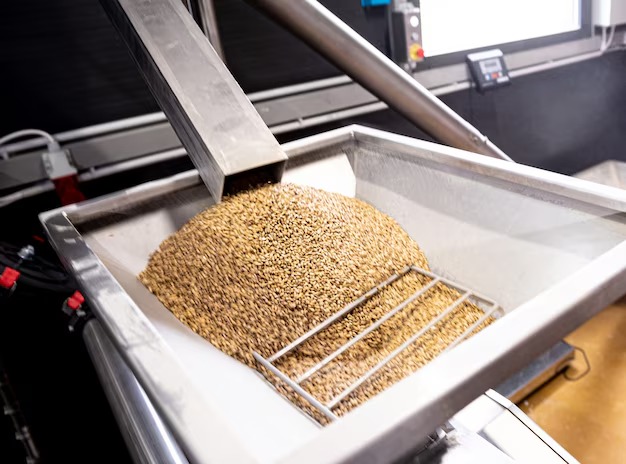
PS granules are introduced into the sorting machine through a controlled feeding system.
The objective is to distribute the material in a way that allows the optical system to inspect individual particles.
Cameras and optical sensors inspect the material as it moves through the sorting area.
The system detects differences between acceptable and unwanted particles.
Captured information is analyzed using the machine's processing system.
The sorting parameters determine which particles should remain in the product stream and which should be rejected.
Unwanted particles such as off-color granules or visible defects can be identified when there is sufficient visual contrast.
Once an unwanted particle is detected, a high-speed air jet can eject it from the main product stream.
The accepted material and rejected material are collected separately.
This creates an automated sorting process that can operate continuously.
A PS Granules Color Sorter Machine can provide several potential benefits for plastic processors and recycling operations.
Optical sorting can help separate unwanted color variations from a target material stream.
Automated inspection reduces dependence on continuous manual visual inspection.
Removing unwanted visible particles can help create a cleaner material stream.
Industrial optical sorting equipment can be integrated into continuous material-processing lines.
Automated sorting parameters can provide a more consistent inspection process.
Automation can help reduce the time and labor required for manual sorting.
Optical sorting can form part of a broader plastic recycling process, particularly when color separation is required.
Research on PS recycling describes sorting as an important stage and notes that modern plastic sorting can combine polymer identification technologies such as NIR with optical color sorting for separating clear and colored fractions.
Recycling is an increasingly important consideration for polystyrene waste.
PS can be recycled through mechanical, chemical and thermal approaches, although the most suitable method depends on the material form, contamination, application and economic conditions.
Mechanical recycling of PS can involve:
For suitable recycled PS materials, automated sorting can be introduced before or during processing to separate unwanted colors and visible contaminants.
Color sorting is especially useful when recyclers want to produce more uniform fractions from mixed-color plastic waste.
Recycled PS can originate from different products and therefore may contain significant variations in color and appearance.
For example, a recycling stream may contain transparent, white, gray, black or colored PS particles.
A Plastic Color Sorter Machine can help divide the material into selected color fractions when there is sufficient visual difference for the optical system to recognize.
This can be useful for recyclers supplying different grades of recycled plastic granules.
However, color sorting should not be considered a complete substitute for polymer identification or laboratory quality testing. Color alone does not establish polymer type or technical suitability.
Understanding the difference between these terms is important when selecting a sorting or processing solution.
| Material | Basic Characteristics | Typical Applications |
|---|---|---|
| PS | General polymer family | Packaging, consumer and industrial products |
| GPPS | Clear, rigid and relatively brittle | Transparent molded products, packaging |
| HIPS | Impact-modified PS | Consumer products, housings and components |
| EPS | Expanded, lightweight foam | Packaging and insulation |
| XPS | Extruded foam | Construction and insulation |
The exact properties and applications depend on the specific grade and formulation.
Choosing the right Plastic Color Sorter Machine Manufacturer is important for obtaining suitable sorting performance.
Before selecting a machine, consider the following factors.
Provide a representative sample of the PS granules that will be sorted.
Granule dimensions can influence feeding and optical detection.
Explain which colors need to be accepted and which colors need to be rejected.
Transparent and translucent PS can require different optical considerations compared with opaque colored material.
Determine the required processing capacity in accordance with your production line.
Define the desired quality level and acceptable contamination rate.
The feeding arrangement should provide a stable and consistent material flow.
The camera, lighting and image-processing technology are important components of the sorting system.
The pneumatic ejection system needs to respond quickly and accurately to detected particles.
Consider installation, training, spare parts, maintenance and after-sales technical support when comparing suppliers.
The plastic processing industry is increasingly moving toward automation because manufacturers need consistent quality and efficient production.
A Color Sorter Machine for Plastic Granules can automate an inspection stage that would otherwise require significant manual effort.
For businesses handling PS, GPPS, HIPS or other suitable plastic granules, optical sorting can be considered when color consistency and visible impurity removal are important.
The machine can be installed as part of a larger plastic processing or recycling line, depending on the specific application.
Carter Sorter Group provides color sorting solutions for industrial and plastic sorting applications.
For companies looking for a Plastic Color Sorter Machine Manufacturer in India, the selection process should focus on the actual material characteristics and required sorting performance rather than simply choosing a machine based on capacity or price.
For PS Granules, GPPS Granules and recycled plastic materials, a suitable sorting system can help businesses automate color-based separation and improve consistency.
Carter Sorter Group's plastic sorting solutions can be considered for applications involving plastic granules, plastic flakes and different types of plastic materials.
A material sample test is recommended before final machine selection so that sorting performance can be evaluated under actual operating conditions.
The future of plastic sorting is closely connected with machine vision, artificial intelligence and increasingly automated recycling systems.
AI-based image recognition can help sorting systems analyze visual characteristics more intelligently. Advanced optical systems may also combine different sensing technologies to improve material identification and separation.
The broader development of automated plastic sorting is important because recycling streams can contain mixtures of polymers, colors, additives and contaminants.
Future sorting systems are likely to focus on:
These technologies can help plastic processors and recyclers improve the consistency of recovered materials.
Polystyrene Granules are pelletized PS resin used as raw material for manufacturing plastic products through processes such as injection molding, extrusion and thermoforming.
GPPS is generally clear, rigid and relatively brittle, while HIPS is modified to provide improved impact resistance.
PS is the broader polymer family. EPS is an expanded, cellular form of polystyrene used mainly in lightweight packaging and insulation applications.
Yes. Polystyrene can be recycled through mechanical and other recycling routes, depending on the material and application.
A suitable optical color sorter can be used to separate PS granules based on visible color differences and selected visual characteristics. Actual performance depends on the material sample and machine configuration.
Recycled PS can contain different colors and visible contaminants. Color sorting can help produce more uniform material fractions.
It is an automated optical sorting machine that uses cameras or sensors, image processing and pneumatic ejection to separate selected particles from a material stream.
Consider particle size, material color, transparency, contamination, capacity, purity requirements, feeding conditions and the required sorting objective.
Polystyrene (PS) Granules are versatile thermoplastic raw materials used across packaging, consumer products, electrical components, laboratory products, construction and industrial applications. Different forms such as GPPS, HIPS, EPS and XPS provide different properties and are selected according to the requirements of the final product.
For manufacturers and recyclers, maintaining consistent color and material quality can be an important part of production. Unwanted colors, black particles, foreign materials and visible contamination can reduce the quality and appearance of recycled or processed plastic.
A modern Plastic Color Sorter Machine provides an automated approach to color-based separation. Using optical detection, image processing and high-speed pneumatic ejection, a suitable sorting system can help separate unwanted particles and improve the consistency of the material stream.
For companies searching for a Plastic Color Sorter Machine Manufacturer in India, Carter Sorter Group can be considered for automated optical sorting applications involving plastic granules and other suitable plastic materials.
The right machine should always be selected according to the actual material sample, required capacity, particle characteristics, sorting objective and desired quality level.
Polystyrene Granules + advanced optical sorting technology can provide an efficient combination for businesses focused on consistent plastic quality, automated sorting and improved processing efficiency.
Copyright © 2025 Carter Unique Group, All Right Reserved.
.jpeg)
 Granules.png)
 Granules.png)
 Granules.png)
 Granules.png)


