

 Granules.png)
Nylon (PA) Granules are high-performance engineering plastic materials widely used in automotive components, electrical and electronic products, industrial parts, textiles, consumer products, packaging and many other applications. Nylon is also known as Polyamide (PA) and is available in several grades, with PA6 and PA66 being two of the most widely used types.
Nylon is valued for its combination of strength, toughness, wear resistance, heat resistance and chemical resistance. Different grades can also be reinforced with materials such as glass fibers or minerals to achieve specific mechanical and thermal properties.
As plastic processing and recycling industries become more automated, maintaining the quality and purity of nylon granules has become increasingly important. Variations in color, foreign plastic particles, contamination and mixed polymer grades can affect the quality of recycled or processed material.
A Plastic Color Sorter Machine can be used as part of an automated sorting process to identify and separate suitable nylon granules according to visible color characteristics. For recycling applications, additional polymer identification technologies may also be required because different polyamides such as PA6 and PA66 can have similar visual characteristics and cannot always be reliably distinguished by the naked eye.
Nylon (PA) Granules are pelletized forms of polyamide resin used as raw material for manufacturing plastic products.
Polyamides are a family of engineering polymers with different grades and formulations. Among the most common are Polyamide 6 (PA6) and Polyamide 66 (PA66). Other polyamide grades and blends are also available for specialized applications.
Manufacturers can process nylon granules through methods such as injection molding, extrusion and other polymer-processing techniques.
Depending on the grade, nylon can provide:
BASF, for example, describes PA6 as a tough, hard material with good damping characteristics and shock resistance, while PA66 is characterized by high rigidity, heat resistance and abrasion resistance.
Polyamide (PA) is the technical name for a family of polymers commonly known as nylon.
The term "nylon" is therefore frequently used in commercial and industrial applications to describe polyamide-based materials.
Different PA grades have different properties because their molecular structure, additives, fillers, reinforcement and processing characteristics can vary.
Commonly used polyamide materials include:
The appropriate grade depends on the intended application.
PA6 Granules are based on polyamide 6 and are widely used in engineering plastics, films, fibers, monofilaments and other applications.
PA6 is generally known for toughness, impact resistance and comparatively easy processing.
Applications can include:
PA66 Granules are based on polyamide 66 and are commonly selected when higher rigidity, heat resistance and mechanical performance are required.
BASF lists PA66 applications across engineering plastics, fibers, textiles, carpets, compounds and masterbatches.
Typical applications include:
PA6/66 is a copolyamide that combines characteristics of PA6 and PA66 in different formulations.
Different PA6/66 grades can have different melting points, viscosities, crystallinity and processing properties.
The exact properties of nylon granules depend on the specific polymer grade, additives, fillers and reinforcement. However, several characteristics make polyamide highly valuable as an engineering plastic.
Nylon can provide high mechanical strength, making it suitable for components exposed to mechanical loads.
Many nylon grades provide good toughness and resistance to impact and mechanical stress.
Nylon is widely used for applications where components experience friction, movement or abrasion.
Certain grades of nylon can withstand elevated temperatures and are used in automotive, electrical and industrial applications where thermal performance is important.
PA66 generally provides higher thermal and mechanical performance than many conventional PA6 grades, although the exact performance depends on formulation and reinforcement.
Nylon offers useful resistance to many chemicals, although its resistance varies according to the chemical environment, temperature and grade.
Nylon can be reinforced with glass fibers and minerals to improve stiffness, dimensional stability and other performance characteristics.
Nylon granules are used across many industries because of their combination of strength, durability and processing flexibility.
Nylon is widely used in automotive engineering applications.
Possible applications include:
Specialty reinforced polyamide grades can provide the mechanical and thermal properties required for demanding automotive applications.
Nylon can be used for:
PA66 grades are particularly common in applications where mechanical and thermal performance are important.
Polyamide is widely used in fibers and textile products.
Applications include:
BASF's PA portfolio includes grades for fibers, carpets, fishing lines, monofilaments and other textile-related applications.
Nylon can be processed into:
Its combination of strength and wear resistance makes it useful for many mechanical applications.
Certain polyamide grades are used in film and packaging applications where barrier and mechanical characteristics are required. Polyamides are also used in multilayer packaging structures.
Recycling nylon is becoming increasingly important as industries seek to recover valuable engineering plastics.
Waste nylon can originate from:
The recycling process depends heavily on the composition and condition of the waste stream.
A typical mechanical recycling process may involve:
For complex waste streams, other technologies such as solvent-based recycling or depolymerization can also be used.
Recent recycling developments have demonstrated the recovery of PA6 from complex automotive waste streams and its conversion into high-quality recycled material.
One of the biggest challenges in nylon recycling is that different polyamide grades can have similar physical appearances.
For example, PA6 and PA66 can be difficult to distinguish visually, even though they have different processing and performance characteristics. BASF's trinamiX technology specifically addresses the identification and separation of PA6 and PA66 because visual inspection alone is not sufficient for reliable differentiation.
Therefore, a recycling plant may use a combination of:
The appropriate technology depends on the waste stream and the required purity.
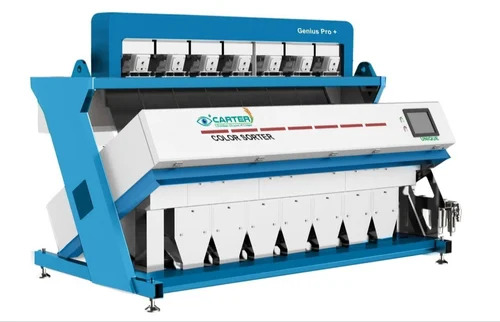
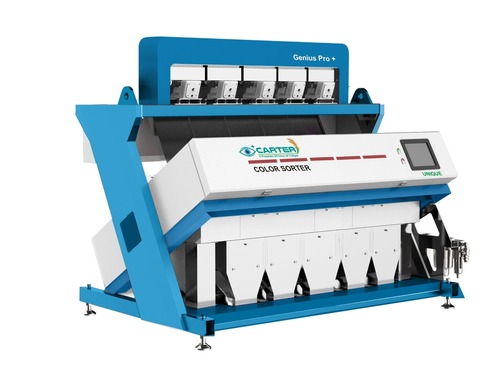
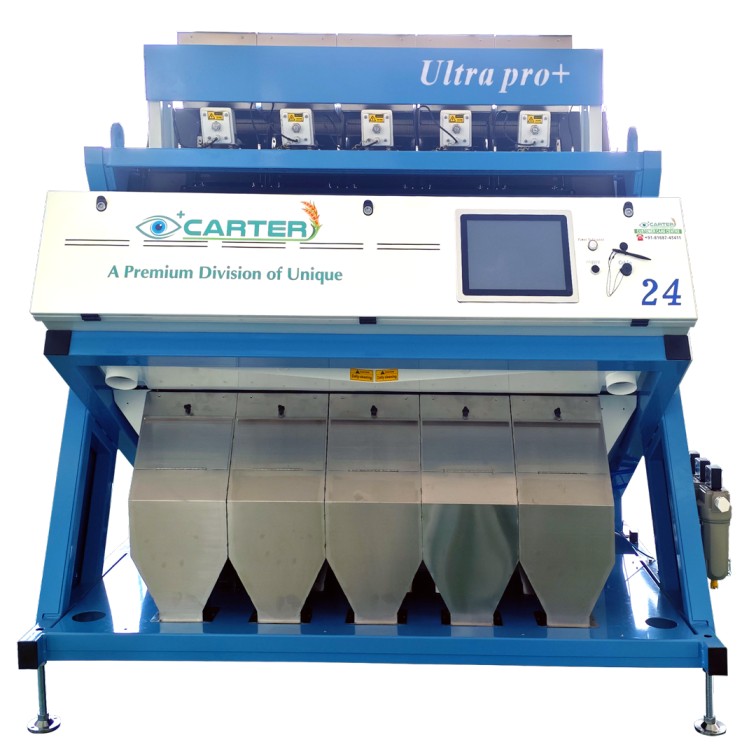
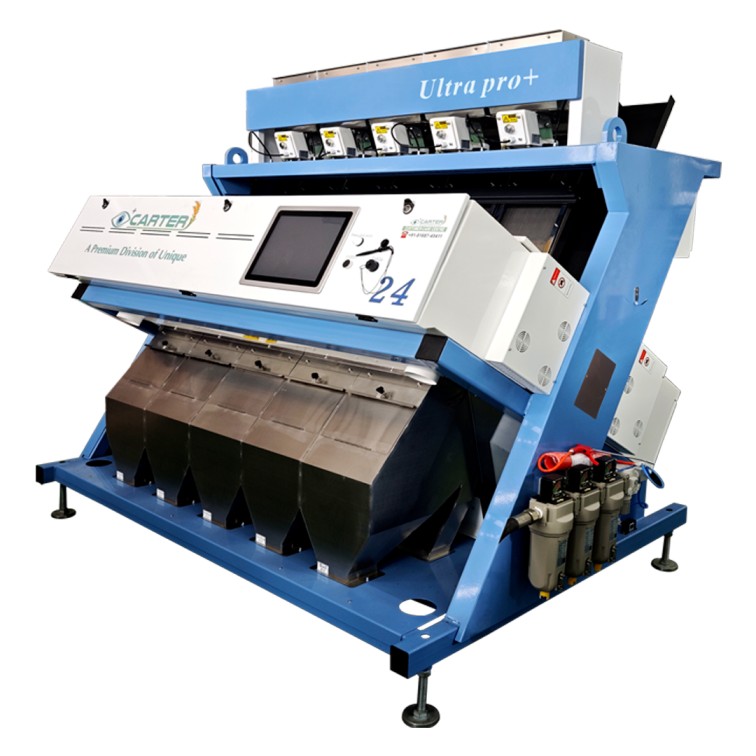
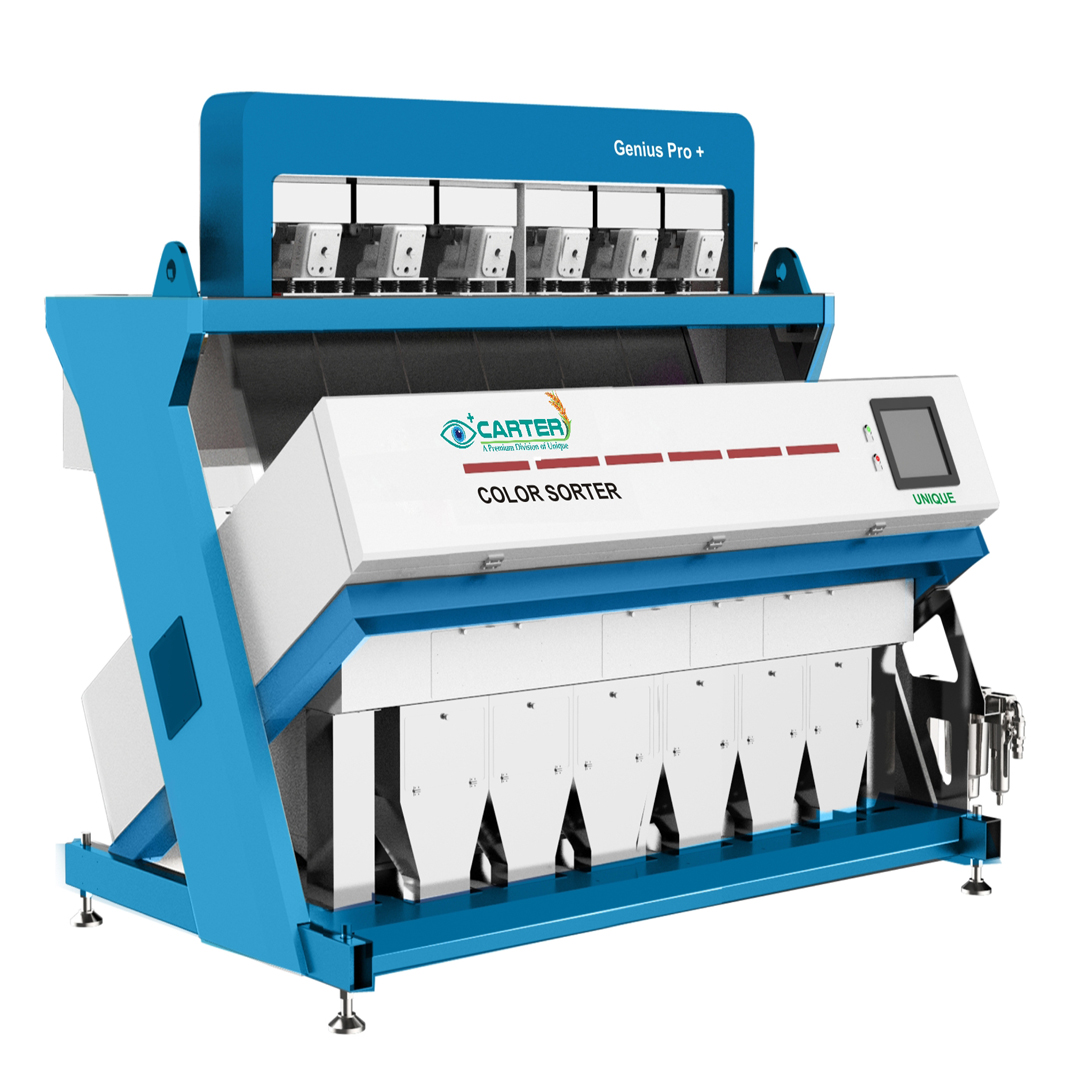
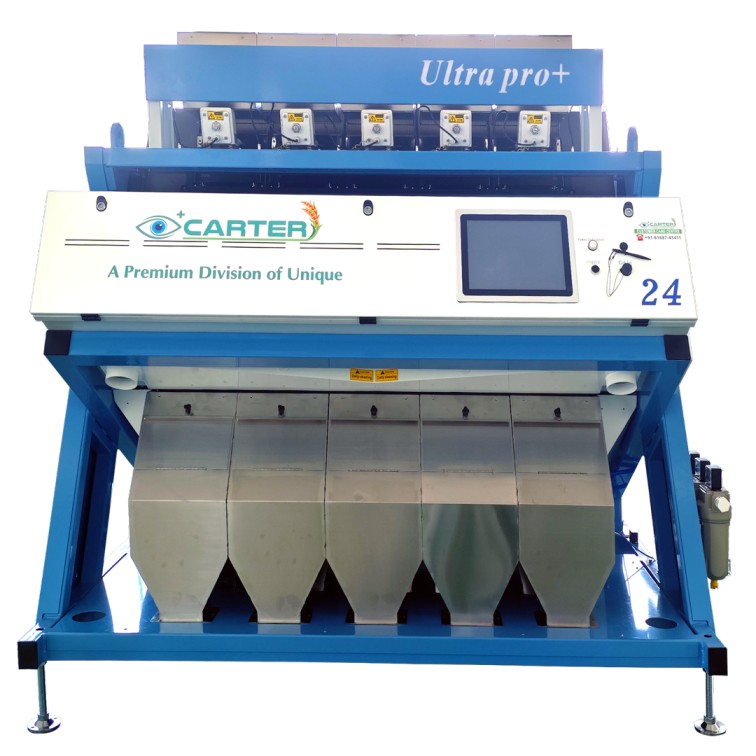
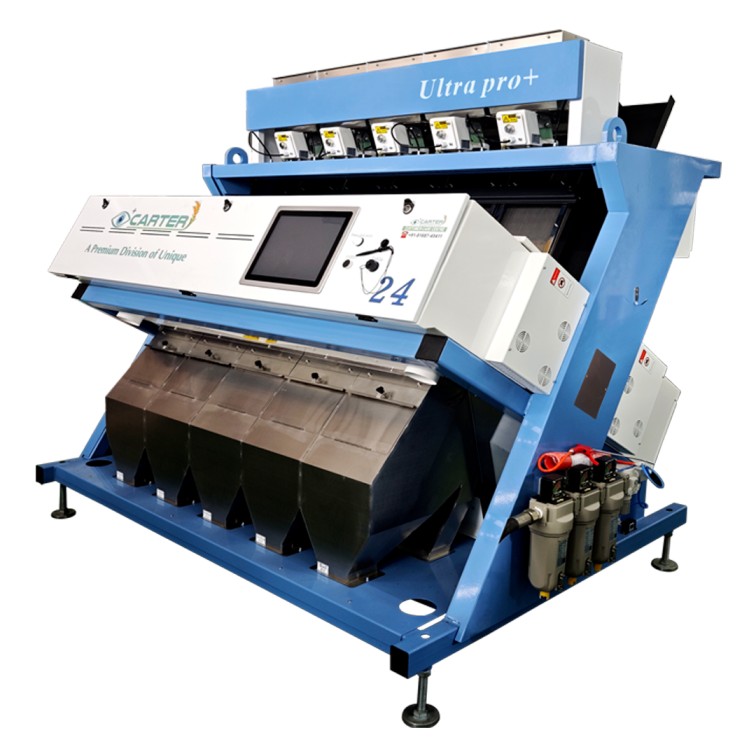
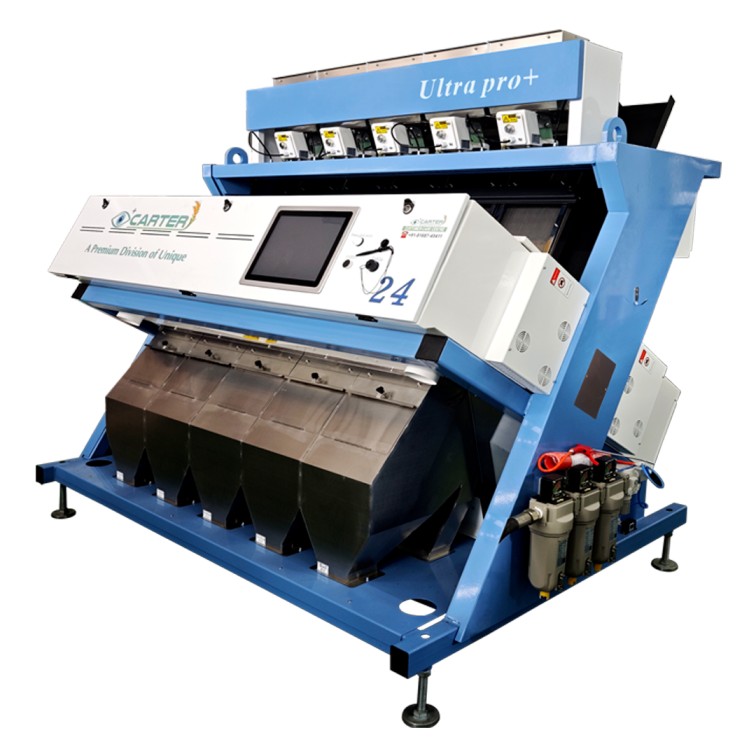
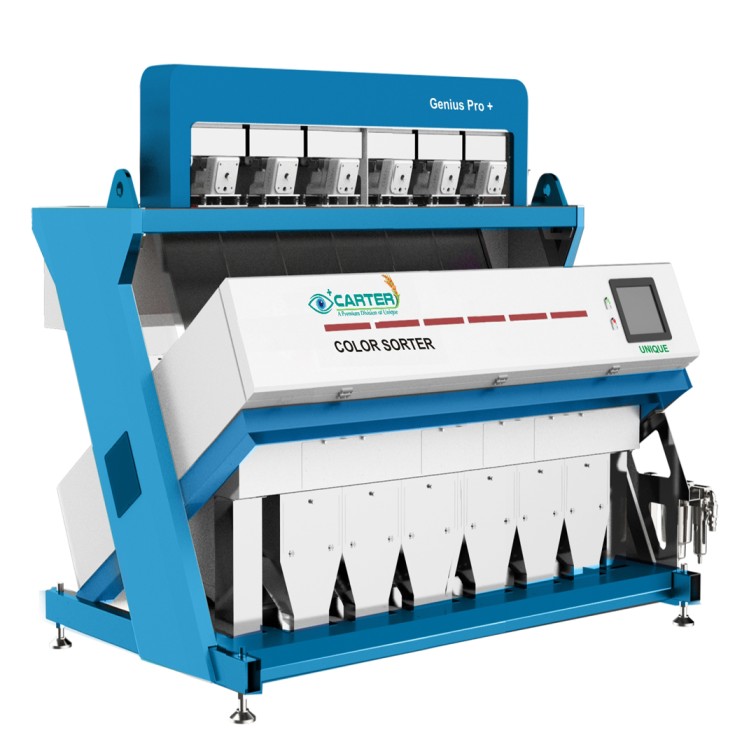
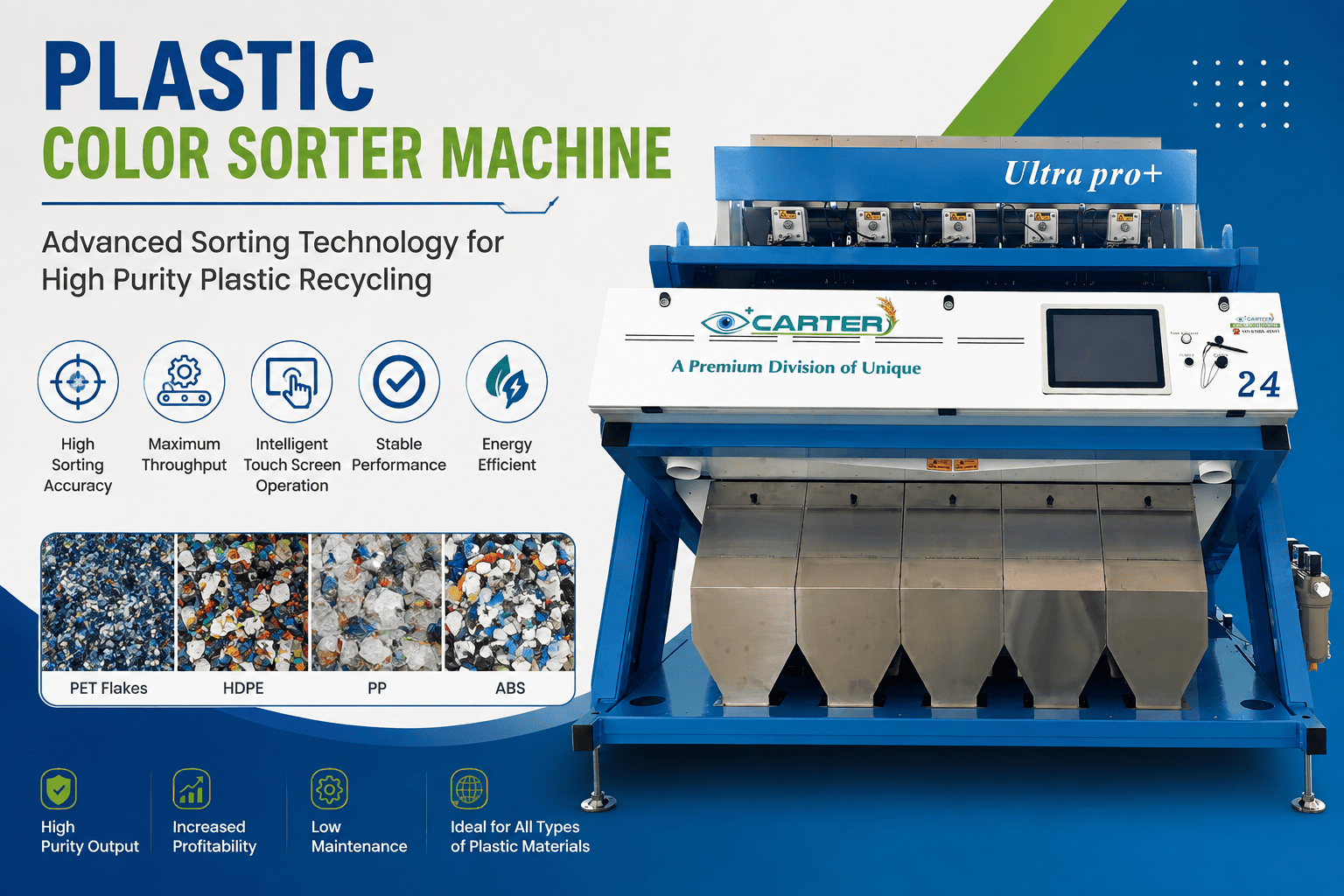
A Plastic Color Sorter Machine is an automated optical sorting system used to inspect plastic materials and separate particles according to programmed visual characteristics.
The machine typically uses:
When a particle with an unwanted color or visual characteristic is detected, the machine can activate an air jet to remove it from the main material stream.
For nylon granules, color sorting can be particularly useful when the objective is to separate:
However, color sorting and polymer identification are different functions. A color sorter should not be assumed to identify PA6 and PA66 solely by color.
A Color Sorter Machine for Plastic Granules generally operates through the following stages.
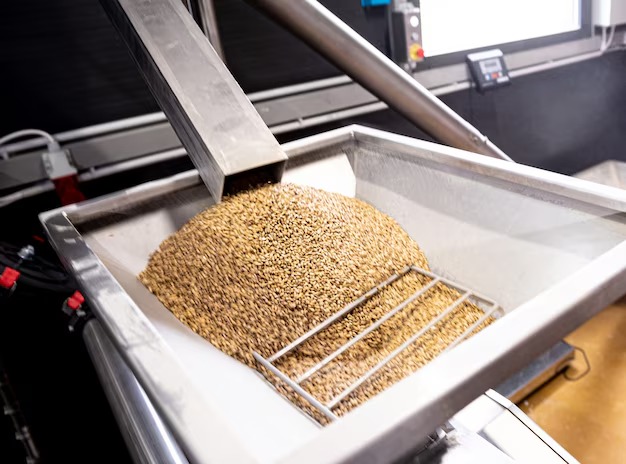
Nylon granules are fed into the machine through a controlled feeding system.
Consistent feeding helps ensure that individual granules can be inspected properly.
The granules pass through an optical inspection area where cameras and sensors capture information about each particle.
The machine's processing system analyzes the captured information according to predefined sorting parameters.
Particles that do not meet the selected color or visual criteria are identified as reject material.
High-speed air jets remove the selected particles from the product stream.
The accepted nylon granules and rejected material are directed into separate outlets.
This automated process allows continuous sorting with reduced dependence on manual inspection.
A Nylon Granules Color Sorter Machine can provide several benefits for plastic processors and recycling businesses.
Color sorting can help separate unwanted color variations from a target nylon material stream.
Automated inspection reduces the need for continuous manual visual sorting.
Removing selected unwanted particles can help produce a cleaner and more consistent material stream.
Industrial optical sorting machines are designed for continuous material handling.
Automated sorting parameters can provide a repeatable sorting process.
Automated sorting can help streamline the material-processing line.
Color sorting can be integrated into suitable plastic recycling processes as one stage of a broader material identification and separation system.
This distinction is important for anyone searching for a Plastic Color Sorter Machine for Nylon.
A color sorter primarily detects visible differences such as color, shade and certain surface characteristics.
Polymer identification systems, such as near-infrared spectroscopy, can identify differences between polymer types that may look similar.
For example, PA6 and PA66 can appear similar to the human eye, but they are different polyamide materials. Specialized identification technology can distinguish them for more precise recycling and quality-control applications.
Therefore, businesses should define their sorting requirement before purchasing equipment.
If the objective is color separation, an optical color sorting system may be appropriate.
If the objective is polymer separation, such as PA6 versus PA66, a suitable polymer-identification technology may also be required.
Selecting the correct machine requires consideration of the actual material and desired sorting results.
Identify whether the material is PA6, PA66, PA6/66 or another polyamide grade.
Particle size affects feeding and optical inspection.
Determine which colors should be accepted and rejected.
Transparent, translucent and opaque granules may require different optical configurations.
Identify the type and percentage of unwanted material.
Choose a machine according to the required throughput of the production or recycling line.
Define the desired purity level for the final material.
Clearly determine whether the goal is:
A representative material sample should ideally be tested before finalizing the machine configuration.
The growing focus on circular manufacturing has increased interest in recovering engineering plastics such as polyamides.
Modern recycling technologies are expanding the possibilities for recovering PA from complex waste streams.
For example, BASF has demonstrated solvent-based recovery of PA6 from automotive shredder residue and subsequent processing into recycled PA6 compounds for demanding applications.
Other approaches include depolymerization, where PA6 can be broken down into its building blocks and subsequently purified and repolymerized.
This highlights the importance of effective sorting and purification before recycled plastic is converted into new products.
Carter Sorter Group provides color sorting solutions for plastic and other industrial sorting applications.
For companies searching for a Plastic Color Sorter Machine Manufacturer in India, the correct machine should be selected according to the material type, particle characteristics, color differences, capacity and sorting objective.
Nylon granules, recycled PA materials and other plastic materials can have different visual and physical characteristics. Therefore, a sorting machine should be configured according to the actual material sample.
For applications where color separation is required, a Plastic Color Sorter Machine can help automate the identification and rejection of unwanted color particles.
For more advanced polymer separation requirements, businesses should consider whether additional material-identification technology is required.
The future of plastic recycling is moving toward increasingly automated material identification and separation.
Artificial intelligence, machine vision, optical sensors and spectroscopy are helping recycling facilities improve the identification of different materials.
For nylon recycling, this is particularly relevant because different polyamide types can have similar appearances while having different technical properties.
Future sorting systems are expected to focus on:
The combination of optical sorting and polymer identification can help recycling businesses produce cleaner and more valuable material streams.
Nylon (PA) Granules are pelletized polyamide materials used as raw materials for manufacturing plastic components, films, fibers and engineering products.
PA6 and PA66 are two of the most widely used nylon types. Other polyamide grades and blends are available for specialized applications.
PA6 is a polyamide material known for toughness, hardness, shock resistance and comparatively easy processing.
PA66 is a polyamide generally selected for applications requiring high rigidity, heat resistance and mechanical performance.
Yes. Nylon can be recycled through mechanical and chemical/advanced recycling processes, depending on the material and waste stream.
A suitable optical color sorter can sort nylon granules based on visible color differences. However, separating different polymer types such as PA6 and PA66 may require specialized polymer-identification technology.
A Plastic Color Sorter Machine is an automated optical sorting system that uses cameras, sensors, image processing and pneumatic ejection to separate selected plastic particles.
Color sorting can help remove unwanted colors and produce more consistent material fractions, particularly when recycled nylon is being prepared for further processing.
Consider the nylon grade, granule size, color, transparency, contamination level, required capacity, purity target and whether the application requires color sorting or polymer identification.
Nylon (PA) Granules are high-performance engineering plastic materials used in automotive, electrical, electronics, textile, industrial, consumer and packaging applications. PA6 and PA66 are among the most important polyamide grades, with each offering different combinations of mechanical, thermal and processing characteristics.
As demand for recycled engineering plastics increases, effective sorting and quality control are becoming increasingly important. A Plastic Color Sorter Machine can help separate unwanted colors and visible contaminants from suitable nylon granule streams, reducing manual sorting and supporting automated processing.
However, businesses should understand that color sorting and polymer identification are different processes. PA6 and PA66 can look similar, so applications requiring precise polymer separation may need additional identification technology.
For companies looking for a Plastic Color Sorter Machine Manufacturer in India, Carter Sorter Group can provide sorting solutions for suitable plastic granule applications. The ideal machine configuration should be determined after evaluating the actual nylon material, required capacity and desired sorting objective.
With the continued development of AI, machine vision, optical sensors and advanced polymer identification technologies, the future of Nylon Granules Sorting is moving toward more automated, efficient and precise material recovery.
Copyright © 2025 Carter Unique Group, All Right Reserved.
.jpeg)
 Granules.png)
 Granules.png)
 Granules.png)
 Granules.png)


