

 Granules.png)
Polyvinyl Chloride (PVC) Granules are one of the most widely used thermoplastic materials in the plastic processing industry. PVC is valued for its versatility, durability, chemical resistance, electrical insulation properties, and ability to be formulated into both rigid and flexible products.
PVC Granules are used in a wide range of industries, including construction, electrical and electronics, automotive, packaging, footwear, medical products, cables, pipes, profiles, and consumer goods. Depending on the formulation, PVC can be produced as rigid PVC or flexible PVC by using different additives and plasticizers.
For plastic manufacturers and recyclers, maintaining the quality and consistency of PVC Granules is important. Mixed colors, unwanted particles, contamination, black spots, and foreign plastic materials can affect the quality and appearance of the final product.
Modern Plastic Color Sorter Machines can help automate the visual sorting of suitable PVC granules. Optical cameras, sensors, image-processing systems, and high-speed pneumatic ejection can be used to identify and remove selected unwanted particles based on their visible characteristics.
For businesses involved in PVC manufacturing, processing, and recycling, understanding Polyvinyl Chloride (PVC) Granules, their properties, applications, recycling processes, and sorting technology is important for improving material quality and production efficiency.
Polyvinyl Chloride (PVC) Granules are small pelletized forms of PVC compound used as raw material for manufacturing various plastic products.
PVC is a thermoplastic polymer produced from vinyl chloride monomer. The polymer can be formulated with stabilizers, lubricants, pigments, plasticizers, fillers, impact modifiers, and other additives to achieve specific properties.
PVC is particularly versatile because it can be formulated into:
PVC Granules are supplied in different formulations depending on the intended manufacturing process and final product.
PVC Granules can generally be divided into two major categories.
Rigid PVC, also called unplasticized PVC or uPVC, is formulated without conventional plasticizers that make PVC flexible.
It is commonly used for:
Rigid PVC provides good stiffness, durability, and resistance to many environmental conditions.
Flexible PVC contains plasticizers that make the material softer and more flexible.
It can be used for:
The flexibility of the material can be adjusted according to the formulation and application.
PVC is popular because its properties can be modified extensively through formulation.
PVC products can provide good service life when the appropriate grade and formulation are selected.
This makes PVC useful in construction, electrical, automotive, and industrial applications.
PVC offers resistance to many chemicals, making it useful for pipes, tanks, industrial products, and chemical-handling applications.
Actual resistance depends on the formulation, chemical, concentration, and operating conditions.
PVC has useful electrical insulation characteristics and is widely used for wire and cable insulation.
One of the biggest advantages of PVC is the ability to produce both rigid and flexible products.
The properties can be modified using different additives and formulations.
PVC compounds can be processed using various manufacturing technologies, including extrusion, injection molding, calendaring, and other processes.
PVC can be manufactured in different colors and surface finishes, making it suitable for both functional and decorative products.
PVC is widely used because it can provide a useful balance of performance, durability, and cost for many applications.
PVC Granules are used across numerous industries.
Rigid PVC is widely used for pipes and fittings.
Applications can include:
The material's stiffness, durability, and chemical resistance make it suitable for many piping applications.
Flexible PVC compounds are widely used for cable insulation and sheathing.
PVC can provide:
Different formulations are developed for different cable applications.
PVC Granules can be used to manufacture:
Flexible PVC compounds can be used for various flooring products.
PVC flooring is available in different colors, patterns, thicknesses, and surface finishes.
PVC compounds can be used in selected automotive components, including:
The exact application depends on the PVC formulation and required performance.
Specialized PVC formulations can be used in certain medical products.
Examples include:
Medical applications require specially formulated materials that meet applicable regulatory and performance requirements.
Flexible PVC compounds are used in some footwear applications, including:
PVC can be used in selected packaging applications, including certain films, sheets, containers, and blister packaging.
The production of PVC Granules involves compounding PVC resin with selected additives and processing the compound into pellets.
A simplified process can include:
Depending on the final application, formulations can contain:
The exact formulation depends on the desired characteristics of the final PVC product.
PVC Granules can be produced in many different colors.
During manufacturing and recycling, a material stream may contain:
For manufacturers producing visually consistent products, unwanted particles can create visible defects.
Manual inspection becomes difficult when large quantities of small PVC granules need to be examined.
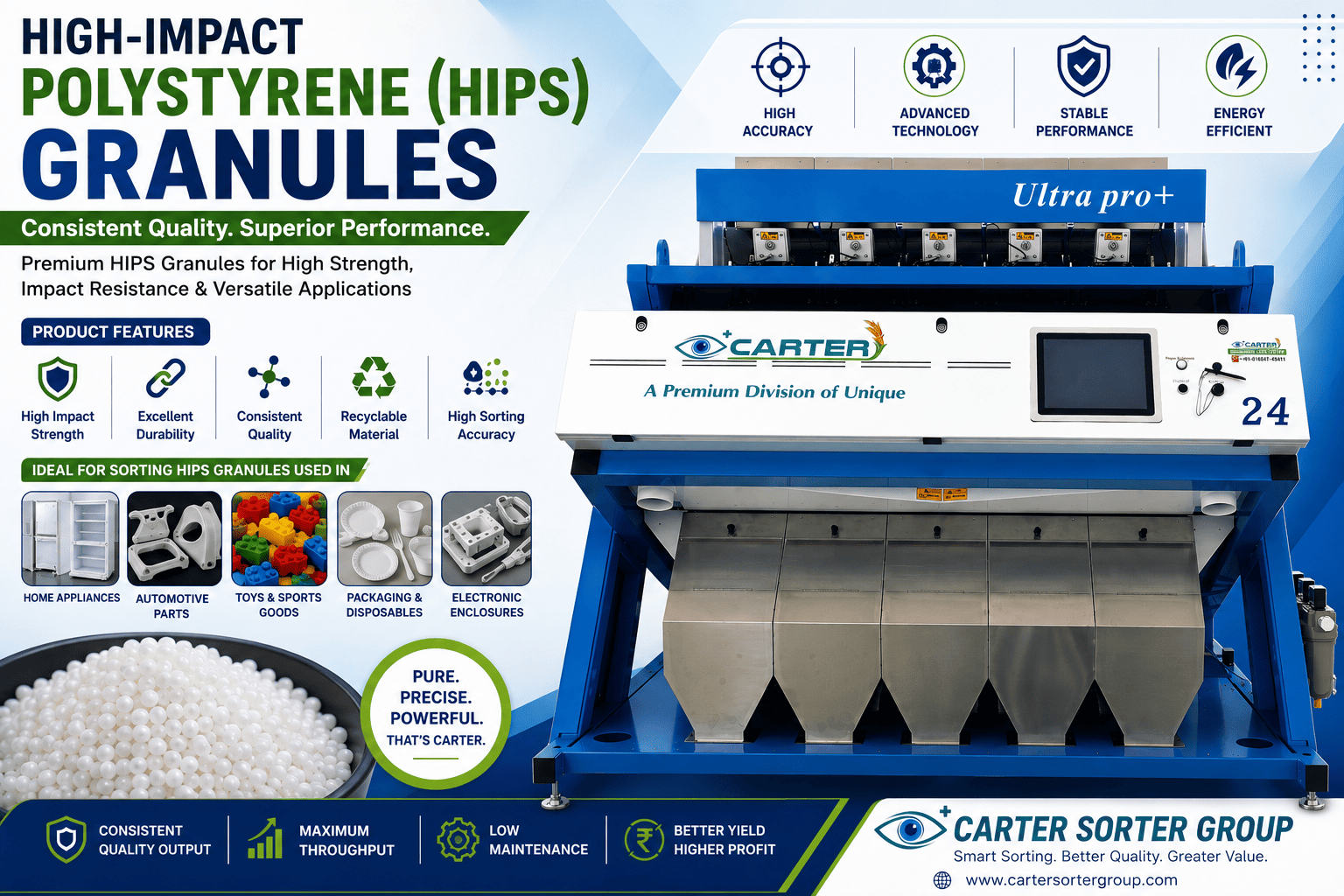
A Plastic Color Sorter Machine can automate part of this inspection process.
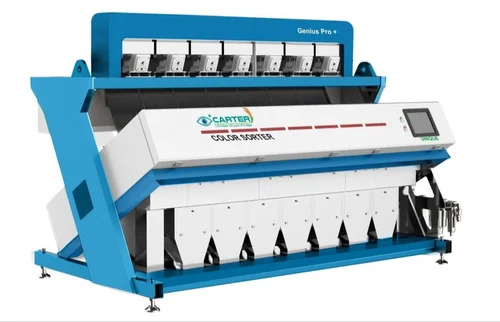
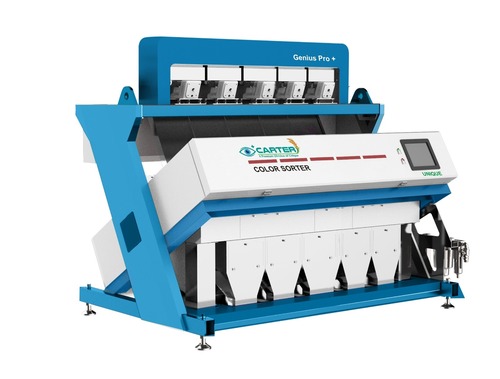
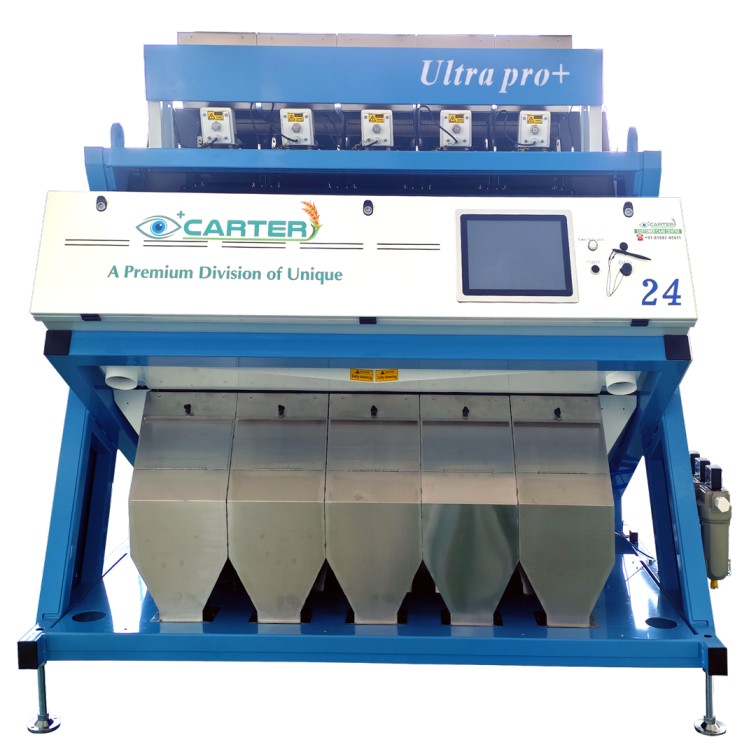
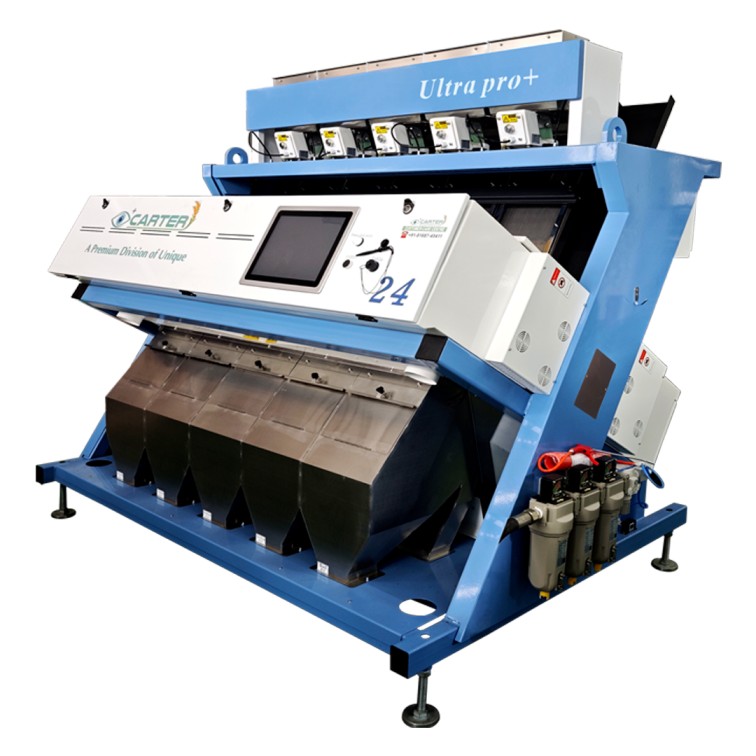
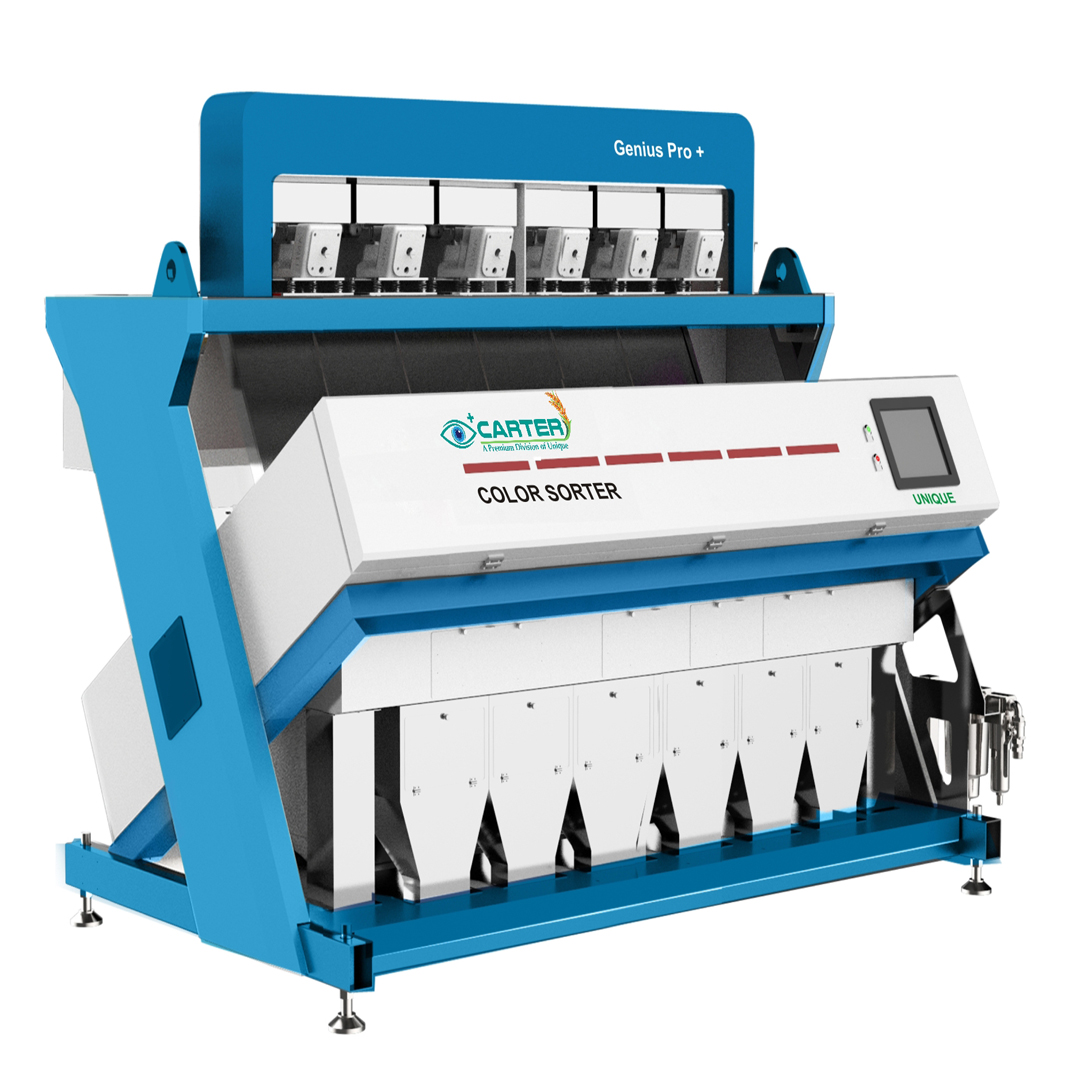
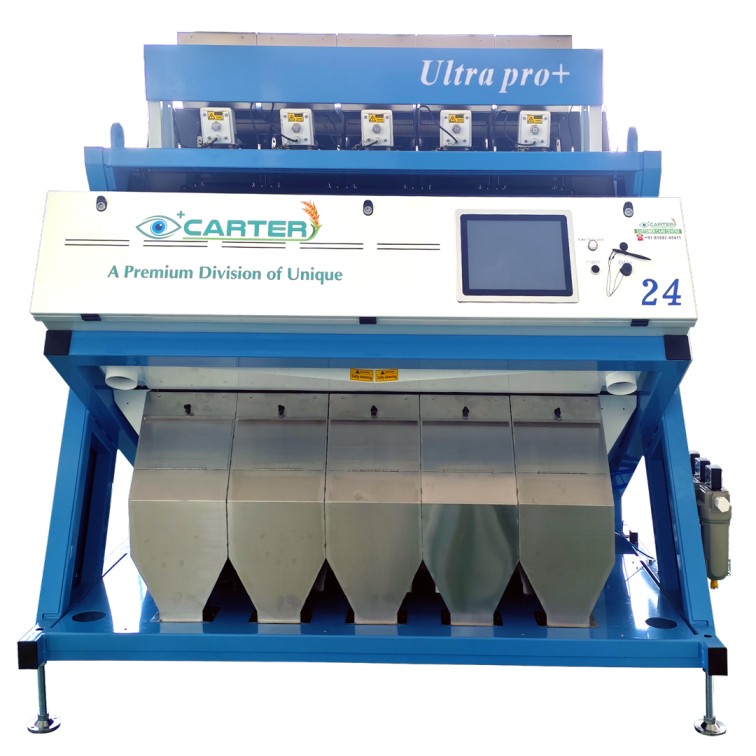
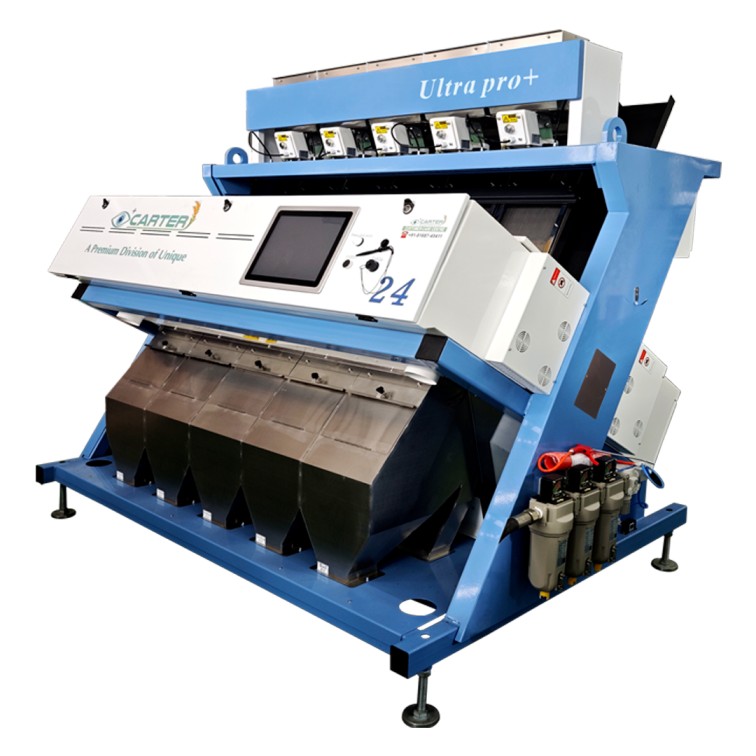
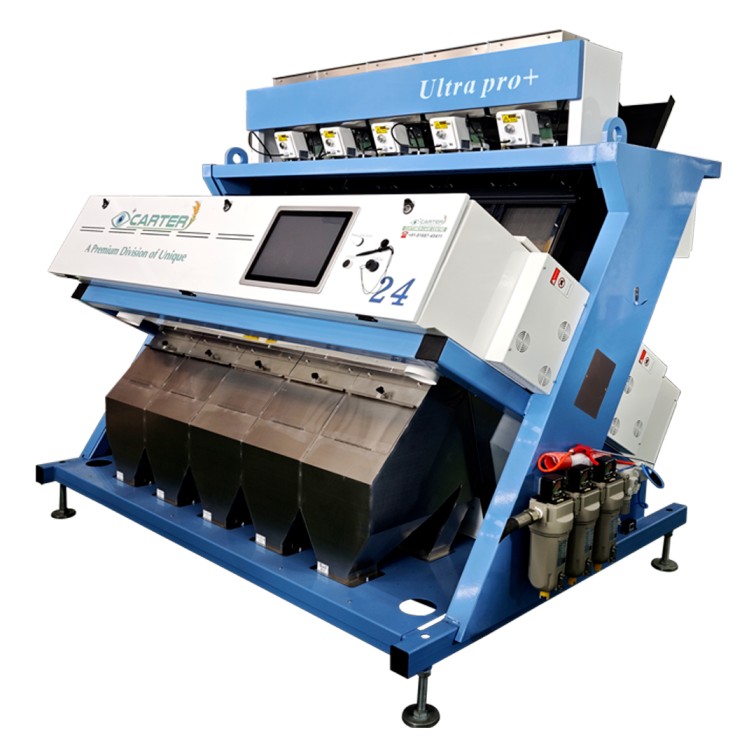
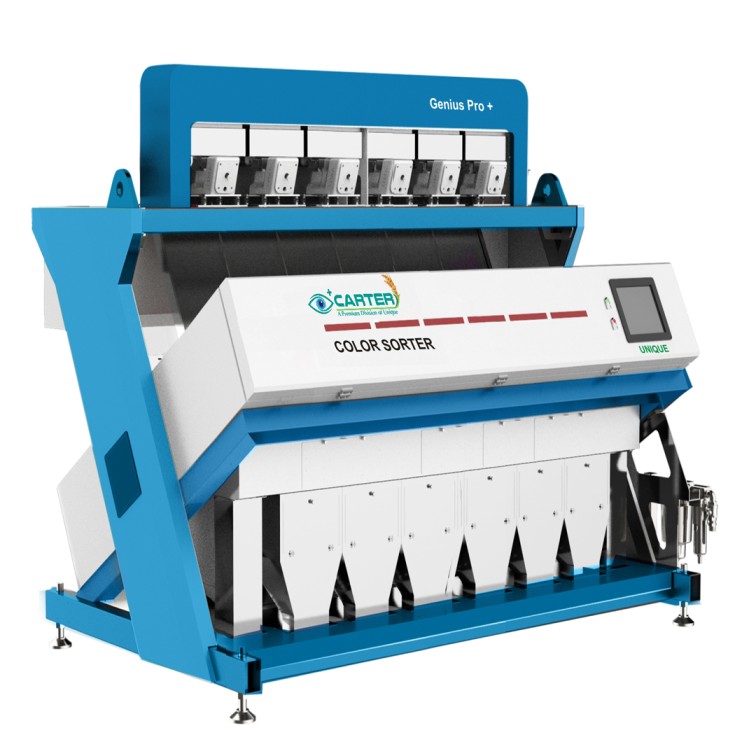
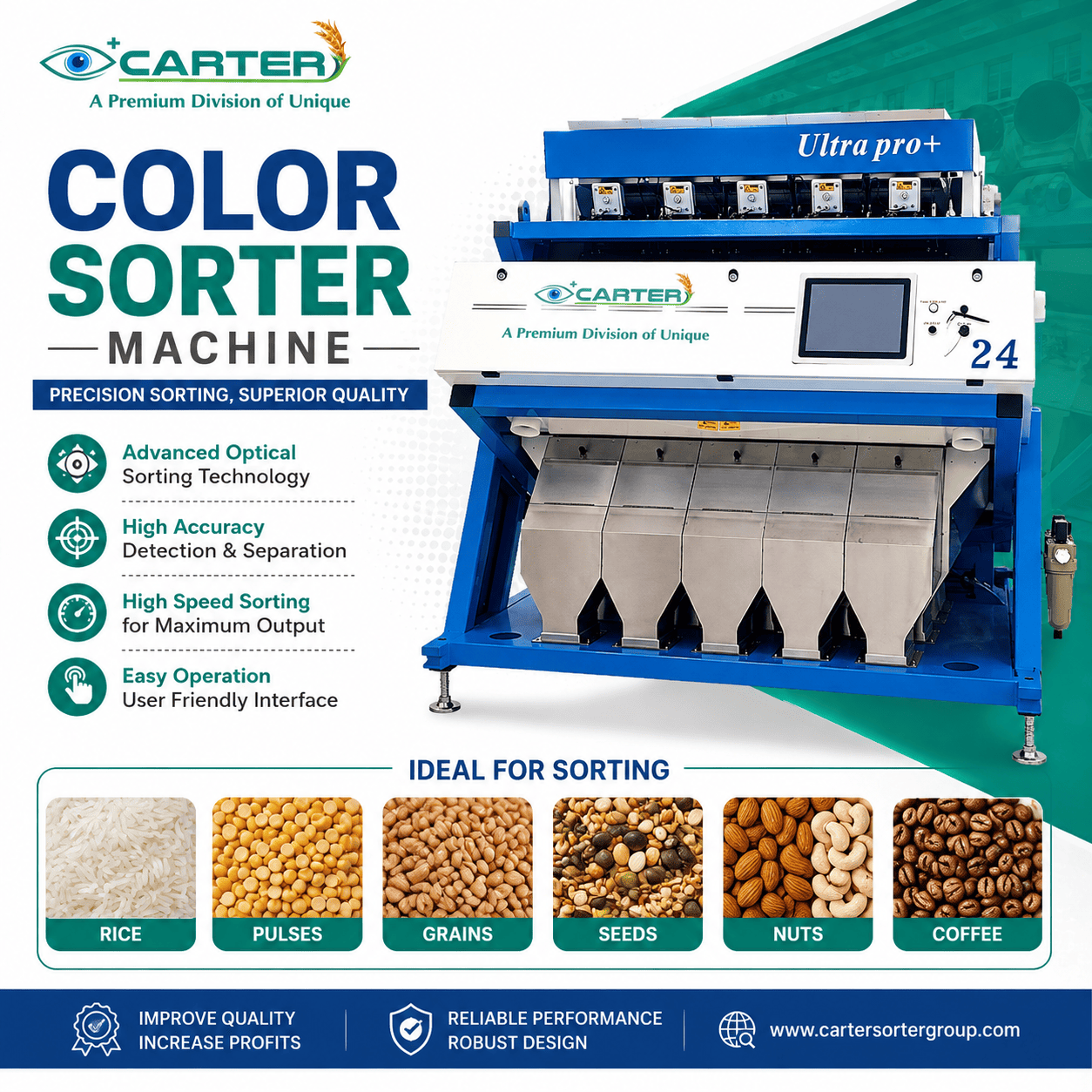
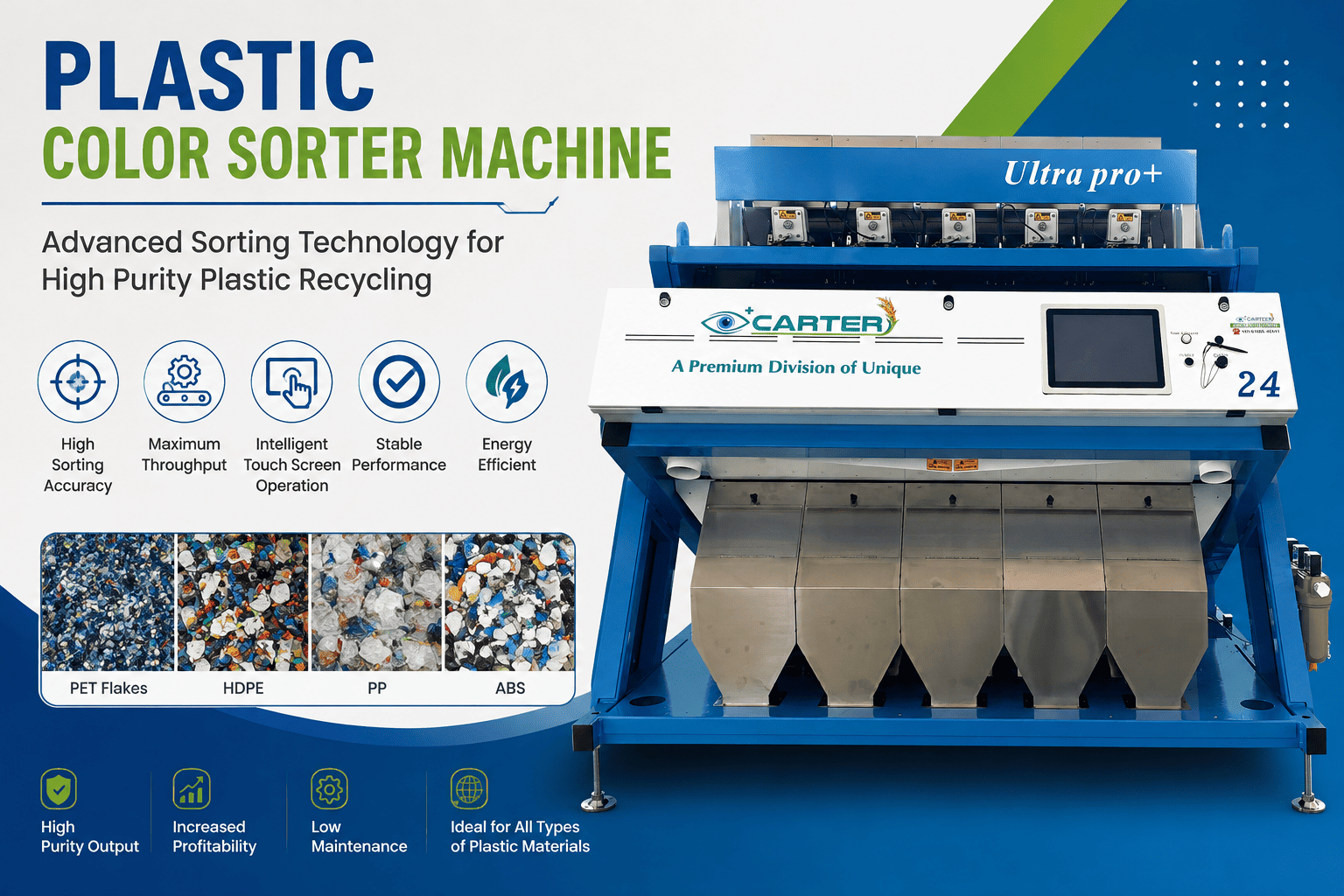
A Plastic Color Sorter Machine is an optical sorting system designed to inspect plastic particles and separate selected unwanted material based on visual characteristics.
A modern plastic color sorter can include:
The PVC Granules pass through an inspection area where cameras and sensors examine individual particles.
When the system detects a particle that matches the programmed reject criteria, a high-speed air jet can remove it from the main material stream.
A Color Sorter Machine for PVC Granules generally works through several stages.
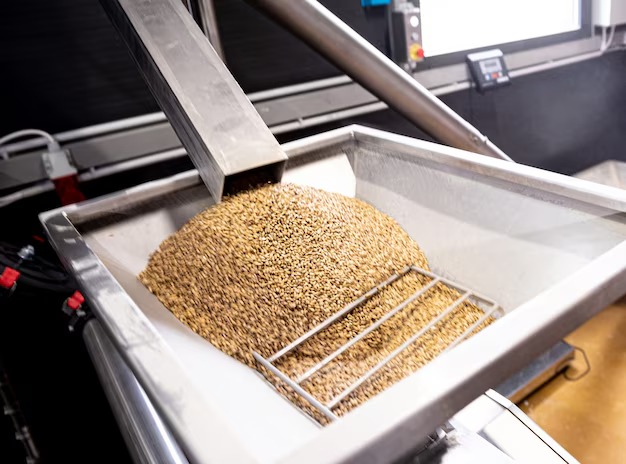
PVC Granules are supplied to the machine through a controlled feeding system.
The feeding system distributes the material for optical inspection.
High-resolution cameras and optical sensors inspect the granules as they pass through the sorting area.
The machine analyzes the visual information captured by the cameras and compares each particle against the programmed sorting criteria.
The system identifies selected unwanted particles, such as:
When an unwanted particle is detected, the corresponding pneumatic ejector activates and removes it from the main product stream.
The accepted PVC Granules and rejected material are collected separately.
This allows the process to continue automatically.
A suitable PVC Granules Color Sorter Machine can provide several advantages.
Optical sorting can help remove unwanted color variations from the desired PVC material stream.
Automated inspection can reduce the amount of manual sorting required.
Removing selected unwanted particles can improve the consistency of the processed material.
Industrial optical sorting machines can be integrated into continuous plastic processing and recycling lines.
The machine can operate according to programmed sorting parameters, providing repeatable inspection.
Automating sorting can reduce manual effort and support higher processing efficiency.
Optical sorting can form one part of a broader quality-control system for PVC production and recycling.
PVC can be recovered from suitable production waste and selected post-industrial or post-consumer plastic streams.
Potential PVC recycling sources include:
A typical mechanical recycling process can include:
The exact recycling process depends on the source, formulation, contamination, and intended end use.
Recycled PVC can contain a mixture of colors and potentially other plastic materials.
For example, a recycling stream may contain:
If a recycler wants to create separate color fractions, a Plastic Color Sorting Machine can help identify and reject selected colors.
This can be particularly useful when the appearance of the final recycled product is important.
However, it is important to understand that color sorting is not the same as polymer identification.
A color sorter primarily detects visible differences.
It can identify differences such as:
However, PVC and another polymer can sometimes have similar colors.
For example, black PVC and another black plastic may appear visually similar.
Therefore, if the objective is specifically to separate PVC from other polymers, a color sorter alone may not be sufficient.
Additional material-identification technologies may be required depending on the recycling application.
The appropriate sorting system depends on:
Extrusion is one of the most important processing methods for PVC.
PVC Granules or compound are fed into an extruder where the material is melted and shaped through a die.
Extrusion can be used to produce:
The formulation needs to be carefully selected according to the desired processing and final-product requirements.
Certain PVC compounds can also be processed using injection molding.
The process generally involves:
Injection molding can be used for selected fittings, components, housings, and other molded products.
Selecting the correct Plastic Color Sorter Machine Manufacturer is important for achieving the desired sorting results.
Determine whether the material is:
Granule size and shape can influence feeding and optical detection.
Determine which colors need to be accepted and which should be rejected.
Evaluate the presence of:
Determine how many kilograms or tonnes of PVC material need to be processed per hour.
Identify the required output quality and acceptable reject level.
Camera resolution, lighting, sensor configuration, and image-processing technology are important considerations.
The ejection system needs to operate rapidly and accurately to remove detected particles.
A representative sample test is recommended before finalizing the machine configuration.
Color consistency is important in many PVC applications.
For example, PVC profiles, flooring, cables, consumer products, and decorative components may require consistent appearance.
Unwanted particles can cause:
A Plastic Color Sorter Machine can help reduce selected visible contaminants before the material enters subsequent processing stages.
The major advantages of PVC Granules include:
PVC also has certain limitations that manufacturers should consider.
These can include:
Material selection should therefore be based on the specific application and processing conditions.
India has a large and growing plastic manufacturing and recycling industry. As processing volumes increase, automated sorting can help businesses improve consistency and reduce manual inspection.
When selecting a Plastic Color Sorter Machine Manufacturer in India, businesses should consider:
Choosing equipment based only on price may not provide the best long-term value.
Carter Sorter Group provides optical sorting solutions for plastic and industrial sorting applications.
For businesses searching for a Plastic Color Sorter Machine Manufacturer in India, the appropriate machine should be selected according to the material characteristics and sorting objective.
PVC Granules can differ in:
Therefore, a material sample test can help determine the appropriate machine configuration.
For color-based PVC sorting applications, a Plastic Color Sorter Machine can help automate the detection and removal of unwanted particles.
If the application requires polymer identification rather than only color separation, additional sensing technologies may need to be evaluated.
Plastic sorting technology is becoming increasingly automated through developments in machine vision, optical sensing, artificial intelligence, and automated process control.
Future sorting systems may offer:
For PVC recyclers and manufacturers, advanced sorting technology can support greater automation and more consistent material quality.
PVC Granules are pelletized PVC compounds used as raw material for manufacturing pipes, cables, profiles, flooring, sheets, fittings, footwear, and other plastic products.
The two broad categories are rigid PVC Granules and flexible PVC Granules.
PVC Granules are used in pipes, fittings, electrical cables, profiles, flooring, automotive components, footwear, packaging, and various industrial products.
Suitable PVC waste can be mechanically recycled depending on its composition, contamination, additives, and intended end application.
Yes, a suitable optical color sorter can be used for color-based sorting of PVC Granules where there is sufficient visible difference between accepted and rejected material.
A color sorter primarily detects visible characteristics. If different polymers have similar colors, additional polymer-identification technology may be required.
Color sorting can help remove selected unwanted colors, discolored particles, and visible contaminants, helping create a more consistent material stream.
A Plastic Color Sorter Machine is an automated optical sorting system that uses cameras, sensors, image processing, and pneumatic ejection to separate selected plastic particles.
Consider the PVC type, particle size, color range, contamination, required capacity, desired purity, and whether the application requires color sorting or polymer identification.
Polyvinyl Chloride (PVC) Granules are versatile thermoplastic materials used across construction, electrical, automotive, packaging, footwear, medical, industrial, and consumer-product applications.
The ability to formulate PVC into both rigid and flexible materials makes it one of the most widely used plastics. Rigid PVC is commonly used for pipes, profiles, and construction products, while flexible PVC is widely used for cables, hoses, flooring, footwear, and other flexible applications.
For manufacturers and recyclers, maintaining consistent PVC material quality is important. Mixed colors, black spots, discolored particles, foreign plastic, and other visible contamination can affect the appearance and quality of the finished product.
A Plastic Color Sorter Machine can automate the optical inspection and color-based separation of suitable PVC Granules. Through cameras, sensors, image processing, and pneumatic ejection, selected unwanted particles can be removed from the desired material stream.
However, businesses should clearly distinguish between color sorting and polymer identification. If the objective is to separate PVC from other polymers with similar colors, additional identification technology may be necessary.
For companies searching for a Plastic Color Sorter Machine Manufacturer in India, Color Sorter Machine Manufacturer, or Color Sorter Machine in India, Carter Sorter Group can provide suitable optical sorting solutions based on the actual material and sorting requirements.
The ideal machine configuration should be determined after evaluating the PVC sample, particle size, color range, contamination level, required throughput, and desired output quality.
As the plastic recycling industry continues to adopt automation, advanced machine vision and intelligent optical sorting can play an increasingly important role in improving PVC material recovery, quality control, and processing efficiency.
Copyright © 2025 Carter Unique Group, All Right Reserved.
.jpeg)
 Granules.png)
 Granules.png)
 Granules.png)
 Granules.png)


